Image Source: https://www.koreaherald.com/article/10480925
Manufacturing is one of the hardest environments to keep people engaged in. Shift patterns break up team continuity, plants are spread across states and countries, and a large share of the workforce is deskless – which means the usual playbook of intranet posts and all-hands Zoom calls simply doesn’t reach them.
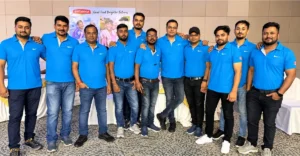
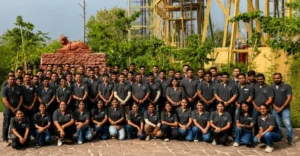
Yet some large manufacturers manage to build a workforce that stays engaged across dozens of sites and thousands of miles. LG Electronics is a useful case to study, because its engagement approach has been shaped by scale: multiple plants in India, a large manufacturing base in South Korea, and a workforce that spans engineers, corporate staff, and assembly-line operators.
This article looks at what LG has actually done – publicly documented programs, communication structures, and culture initiatives – and what other manufacturing leaders can take from it.
Why manufacturing engagement is a different problem
Office-based engagement strategies rarely translate to a factory floor. A recognition wall in a corporate office does nothing for a technician on a night shift. A quarterly town hall is easy to schedule for salaried staff and nearly impossible to schedule for three rotating shifts.
Gallup’s global workplace research has repeatedly flagged engagement as a persistent weak spot in industrial and manufacturing settings, with engagement levels in markets like India lagging what’s needed to sustain productivity gains as workforces scale. Gallup’s research on rebuilding workplace performance points to manager effectiveness and culture – not perks – as the biggest levers for closing that gap. That’s the backdrop against which LG’s approach is worth examining: it’s not a company solving an easy problem, it’s a company working against the same structural headwinds every manufacturer faces.
LG’s manufacturing footprint sets the scale of the challenge
LG Electronics runs manufacturing operations that span continents. In India alone, it operates plants in Noida and Pune, and recently broke ground on a third facility in Sri City, Andhra Pradesh – a $600 million investment expected to produce air conditioners, washers, and refrigerators once fully operational. In South Korea, its production base in Changwon (LG Smart Park) sits alongside R&D campuses in Seoul and Magok.
That combination – corporate R&D talent in one city, production workers in another, and expansion sites opening every few years – means LG can’t rely on a single, centralized culture strategy. Engagement has to travel across geography, language, and job type.
This is the same problem most industrial companies with more than one site eventually run into: the strategy that works at headquarters doesn’t automatically work on the floor 40 kilometers away, let alone in another country.
Structured listening: the LG Way Survey
One consistent thread in how LG has approached internal culture is structured, recurring feedback collection rather than one-off surveys. Reporting on LG’s internal practices describes an assessment tool – referred to internally as the LG Way Survey – used to gauge whether employees feel they can operate with autonomy and whether they’re satisfied with how their leaders lead. The company has also required newly appointed team leaders to hold an open communication session within their first three months, giving their new team a direct channel to raise expectations before working patterns set in.
The detail worth noting here isn’t the survey itself – plenty of companies run engagement surveys. It’s the pairing of measurement with a mandated action (the new-leader session) that turns feedback into a checkpoint rather than a document that sits in HR’s inbox.
Related Posts
Making the brand mean something on the shop floor, not just in ads
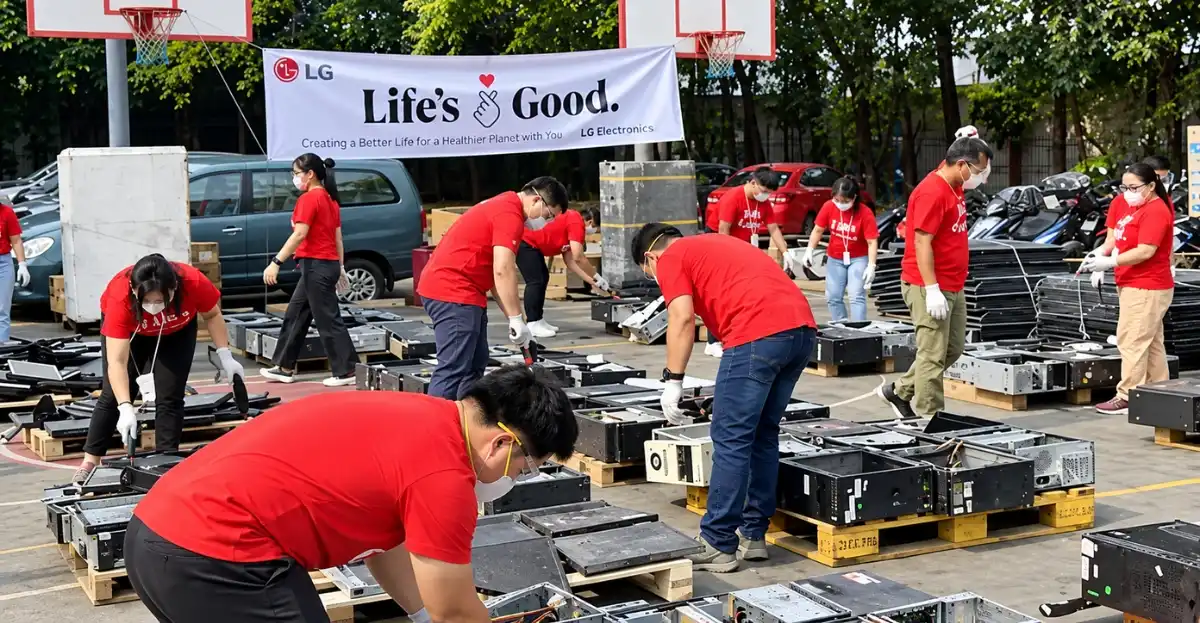
A brand promise only builds engagement if employees experience it, not just customers. LG’s “Life’s Good” brand relaunch is a case in point: rather than confining the new brand direction to marketing campaigns, the company built an internal activation program, sending branded event trucks to eleven business sites across South Korea – including the Changwon production base – so employees could engage with the new identity directly, on breaks, at the plant. LG’s own newsroom account of the Life’s Good rollout describes leadership, including the CEO, showing up in person at these events rather than communicating the change through a memo.
That’s a deliberate choice: a plant worker in Changwon and an R&D employee in Seocho got the same in-person experience of a company update, instead of one group getting a slide deck and the other getting nothing.
Why this matters beyond LG
None of this is exotic. Structured surveys, mandated onboarding conversations for new leaders, and in-person brand activation are all things a mid-sized manufacturer could realistically build. What makes LG’s version instructive is the discipline of applying it consistently across sites that differ enormously in size, language, and function.
For HR leaders trying to make the business case internally, it also helps to have the numbers ready. Engagement isn’t just a culture metric – it shows up in retention costs, defect rates, and safety incidents, and we’ve broken down how to calculate and communicate that return if you need to build a case for investment with your leadership team. It’s also worth looking at how other large consumer-facing manufacturers have approached the same challenge – our look at how Coca-Cola manages people practices covers a similar tension between corporate teams and distributed operations.
Practical takeaways for manufacturing HR teams
A few things worth pulling from LG’s approach if you’re running engagement across multiple plants:
- Pair every survey with a required action: A feedback tool only builds trust if something visibly changes afterward – LG ties its survey data to a mandated conversation for new leaders, not just a dashboard for HR.
- Don’t let brand and culture messaging stay in the corporate office: If a culture initiative can’t physically reach a night-shift worker, it isn’t reaching your whole company.
- Treat scale as the design constraint, not an excuse: LG’s engagement mechanisms had to work across Noida, Pune, Sri City, and Changwon simultaneously – a single-site playbook wouldn’t have survived contact with that footprint.
- Get leadership physically present at production sites: Not just at flagship events. It’s a small thing that changes how initiatives are perceived by frontline teams.
Closing thought
Building engagement across manufacturing hubs isn’t about finding one clever perk – it’s about designing communication and feedback loops that survive being stretched across shifts, sites, and borders. LG’s approach shows that the fundamentals – structured listening, accountable leadership behavior, and consistent culture delivery – matter more at scale than they do in a single office. For manufacturers trying to close their own engagement gap, that’s a more useful lesson than any single program on its own.
Disclaimer: This article is for informational purposes only. While efforts are made to ensure accuracy, readers should verify information and seek professional advice as needed.