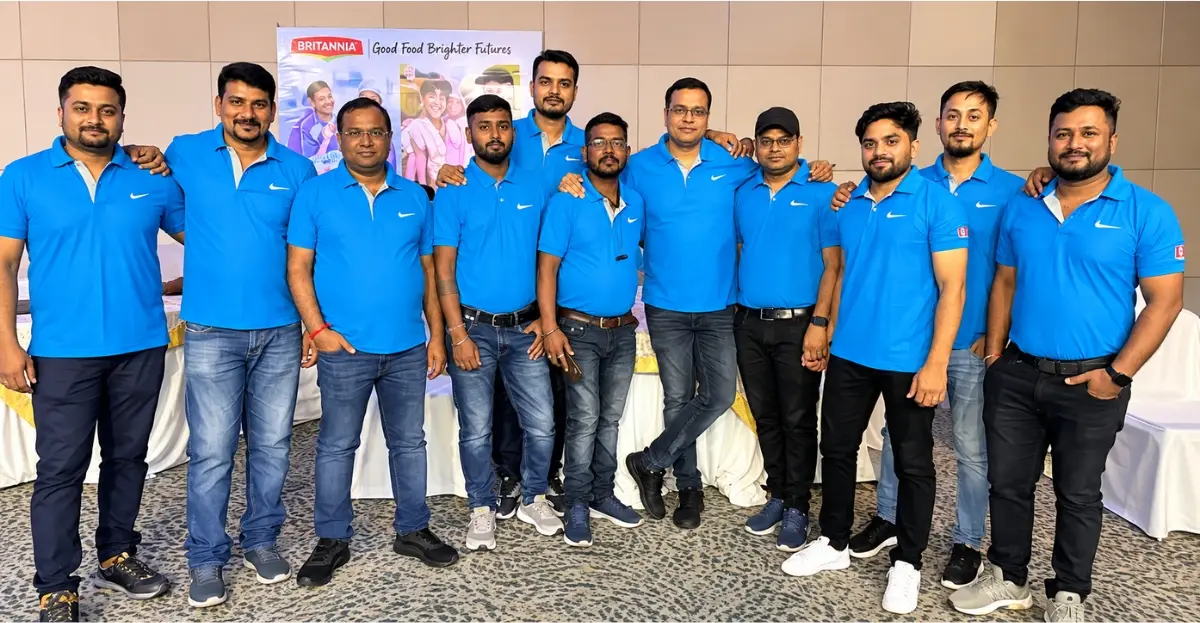
Image Source: https://www.ambitionbox.com/photos/britannia-photos
Most employee engagement strategies are written for one type of employee: someone at a desk, with a laptop and an inbox. That’s a problem for a company like Britannia, where a plant supervisor running a biscuit line in Uttarakhand and a brand manager in a Bengaluru corporate office are both “Britannians,” but live in completely different work realities.
One is managing shift schedules and machine uptime. The other is managing Slack threads and quarterly reviews. Engaging both under one culture, without either group feeling like an afterthought, is the actual challenge – and it’s one most large manufacturing and FMCG companies quietly struggle with.
This piece looks at Britannia employee engagement specifically – how a 130-plus-year-old Indian food company with a leading share of the organized biscuit market has approached this problem across its factory and corporate workforce, and what other organizations managing a mixed blue-collar and white-collar workforce can take from it.
Why Factory and Corporate Engagement Aren’t the Same Problem
The research on this is fairly blunt. Global employee engagement fell to around 20% in 2025, according to Gallup’s latest State of the Global Workplace data, the second consecutive annual decline the firm has ever recorded. But the drop isn’t evenly distributed. Gallup notes that the global workforce is roughly 80% frontline and deskless, yet most workplace systems, communication tools, and engagement surveys are still built with desk-based employees in mind.
That gap shows up in manufacturing specifically. A 2026 State of the Frontline Worker report from goHappy and LHRA, based on more than 52,000 survey responses, found that nearly half of frontline workers show up daily without a strong connection to their work, team, or organization. The same research found frontline workers who receive regular coaching are 50% more likely to understand what’s expected of them, and those who feel appreciated regularly are nearly six times more likely to describe their culture as functional.
In other words: recognition, communication, and coaching move the needle on the factory floor in a way that generic engagement perks don’t. A company running both a corporate HQ and multiple manufacturing plants has to design for both realities at once, not bolt a factory add-on onto a corporate engagement plan.
Britannia’s Starting Point: One Set of Values, Two Very Different Workplaces
Britannia was founded in Kolkata in 1892 and has grown into one of India’s largest food companies, with close to a third of the organized biscuit market as of 2023 and a workforce spread across corporate offices and manufacturing plants across the country. That scale is exactly why a single, generic engagement playbook wouldn’t hold up – the company employs everyone from packaging line operators to category managers.
What ties the two groups together is a shared values framework the company calls the “4 Tings” – Inviting, Igniting, Creating, and Respecting. It’s a deliberately simple structure: come home to Britannia, fuel the hunger to perform, build enriching careers, and do the right thing. The idea isn’t that a factory worker and a marketing executive experience these values identically. It’s that both are being measured against the same cultural yardstick, which keeps engagement efforts from splitting into two unrelated cultures under one name.
How Corporate Teams Are Engaged: Structured Wellness, Not Just Perks
For its office-based and corporate workforce, Britannia has built its engagement approach around a defined wellness cadence rather than one-off events. According to the company’s own published employment practices, this includes:
- Mindful Mondays – expert-led sessions on mindfulness and financial wellbeing
- Wellness Wednesdays – sessions led by senior psychologists focused on emotional health
- Fitness Fridays – structured physical activity aimed at energizing teams
The pattern worth noting is the rhythm. Rather than an annual wellness week that gets forgotten by March, engagement is built into the calendar as a weekly habit, spanning financial, emotional, and physical wellbeing rather than just physical fitness. That structure has been reflected in external recognition: Britannia held the Kincentric Best Employer title for five consecutive years through 2023 and moved into the top 10 nationally in the Kincentric Best Employer Study in 2024, alongside earlier recognition in the Aon Best Employers Study.
How Factory Teams Are Engaged: Safety and Belonging Come First
Ask any manufacturing HR leader what actually drives engagement on a shop floor, and the answer rarely starts with team lunches. It starts with whether workers feel physically safe and whether they feel like they belong. Britannia’s public reporting reflects this priority in two concrete ways.
First, safety: the company has set out a “Zero EHS Incidents” (Environment, Health & Safety) approach across its operations, treating incident prevention as a standing operational goal rather than a reactive compliance exercise. For a frontline workforce running production lines, this matters more than most engagement initiatives combined – research on manufacturing safety culture consistently shows that when workers don’t trust that their safety concerns will be taken seriously, they disengage not just from safety programs but from the job itself.
Second, inclusion: Britannia has set a specific target of women making up 50% of its factory workforce by FY2026-27, up from roughly 44% currently. That’s a notable commitment in a segment of Indian manufacturing that has historically been male-dominated, and it signals something concrete about who the company is designing factory roles for going forward, not just a statement of intent.
Neither of these is a traditional “engagement program” in the survey-and-town-hall sense. But for a factory workforce, physical safety and a workplace where you can see people who look like you are foundational engagement drivers – the things that determine whether someone stays, not just whether they smile in a photo at the annual offsite.
Related Posts
What Connects the Two: Consistent Recognition, Not Parallel Cultures
The throughline across Britannia’s corporate and factory engagement approach is that recognition and culture-building aren’t treated as a headquarters-only exercise that trickles down. The same employer brand line – “Make Tings Happen” – sits above both a plant floor and a boardroom. External recognition programs like Kincentric measure the organization as a whole, not just its corporate offices, which is a meaningful test: an employer study score built only from office survey responses would miss most of the actual workforce.
This is the part that’s genuinely hard to replicate, and where most companies fall short. It’s easy to run a wellness calendar for headquarters staff. It’s much harder to build a culture narrative that a machine operator on a night shift and a finance manager reviewing quarterly numbers both recognize as describing their own workplace.
What Other Organizations Can Take From This
For HR leaders managing a similar split workforce – corporate staff plus plant, warehouse, or field teams – a few practical takeaways stand out from how Britannia has structured this:
- Anchor engagement in a shared values framework, not shared perks: Wellness Wednesdays won’t mean much to someone on a production line, and safety briefings won’t resonate with someone at HQ. What should be shared is the underlying value the initiative expresses – respect, recognition, growth – even if the delivery format differs by role.
- Treat factory-floor safety as an engagement metric, not just a compliance one: If frontline employees don’t trust that their safety concerns are heard, no amount of recognition programming elsewhere will offset that disengagement.
- Build engagement rhythms, not one-off events: A weekly or monthly cadence – whether it’s a wellness session, a safety huddle, or a recognition moment – builds trust in a way an annual town hall doesn’t.
- Measure engagement across the whole workforce, not just the segment that’s easiest to survey: Desk-based employees are far easier to reach with a digital pulse survey than shift workers on a factory floor. If your engagement data mostly reflects office staff, you don’t actually know how engaged your company is.
Similar patterns show up in how other large Indian employers approach culture-building at scale – Capgemini’s approach to building a continuous learning culture is a useful comparison for how a values-first framework can be applied consistently across a large, distributed workforce.
Frequently Asked Questions
What makes employee engagement harder in companies with both factory and corporate teams?
The two groups have different daily realities, different access to communication tools, and different drivers of trust – factory workers tend to prioritize safety and recognition, while corporate teams respond more to flexibility, career growth, and wellness support. A single generic engagement plan usually under-serves one group or the other.
Does Britannia have a formal employee engagement certification?
Britannia has been recognized in independent employer studies, including the Kincentric Best Employer Study (five consecutive years through 2023, top 10 nationally in 2024) and the Aon Best Employers Study. These are third-party assessments rather than a single fixed certification.
What is Britannia’s core values framework called?
Britannia refers to its four core values as the “4 Tings”: Inviting, Igniting, Creating, and Respecting, tied to its employer brand line “Make Tings Happen.”
How can a company measure whether its engagement strategy is working for frontline as well as office staff?
Segment engagement survey data by role type rather than looking only at company-wide averages, and track frontline-specific indicators like safety-reporting comfort, recognition frequency, and manager coaching consistency, not just overall satisfaction scores.
Disclaimer: This article is for informational purposes only. While efforts are made to ensure accuracy, readers should verify information and seek professional advice as needed.