Image Source: https://about.underarmour.com/en/stories/2019/06/scientifically-tested–fitness-influencer-proven-.html
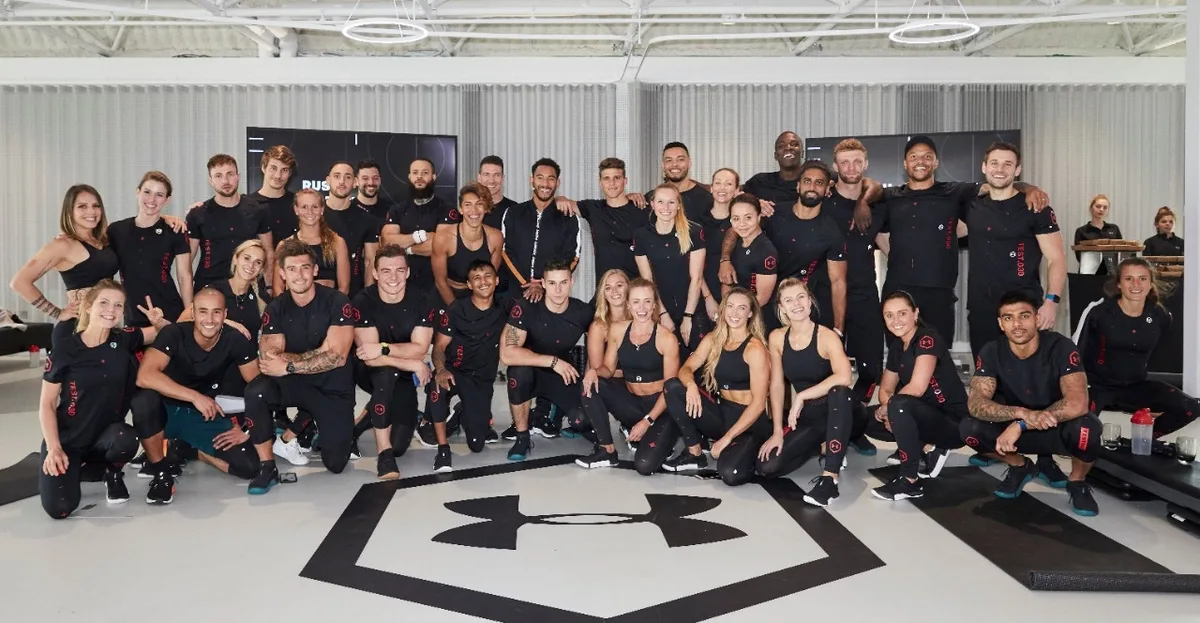
Under Armour doesn’t call its employees “employees.” It calls them teammates. That single word choice tells you almost everything about how the company thinks about team culture – and it didn’t happen by accident.
The Baltimore-based sportswear giant was built by a football player who never really stopped thinking like one. Kevin Plank played special teams for the University of Maryland, got tired of soaked cotton T-shirts during practice, and started sewing something better in his grandmother’s basement in 1996. That’s the origin story everyone knows. What’s less talked about is how directly Plank’s playing days shaped the way he runs a company that now employs close to 7,000 people worldwide.
If you work in HR or employer branding, Under Armour’s approach to Under Armour team culture is worth studying – not because it’s flawless, but because it’s specific, consistent, and tied to something real: sport.
The Locker Room Is the Org Chart
Walk into most corporate mission statements and you’ll find generic language about “empowering people.” Under Armour skips that. Its stated mission is to make athletes better, full stop, and its five core values read like a coach’s pre-game speech: Love Athletes, Celebrate the Wins, Stand for Equality, Act Sustainably, Fight on Together.
That last one is the interesting one. Under Armour describes its own definition of strength as something built through tackling adversity, with teammates expected to help each other through obstacles rather than around them. It’s a value that only makes sense if you’ve been on a team that lost games together before it won any.
This is where the athlete mindset actually shows up in daily operations, not just in marketing copy. Plank has talked about wanting “the best type of people – team, team, team,” and he’s said it plainly enough that it reads more like a locker room mantra than a corporate value statement. Whether every one of the company’s global offices lives up to that ideal every day is a fair question. But the intent is baked into how the company describes itself, not bolted on for a careers page.
Underdog Energy, Even at Scale
Here’s something most large companies lose once they stop being scrappy: the chip on their shoulder. Under Armour hasn’t, at least not by design. Plank has said the company keeps that edge deliberately, because there’s no finish line to compete toward – you just keep running.
That’s a useful lesson for any HR team trying to build a culture around performance without burning people out. The distinction Under Armour draws is between competing against a rival and competing against your own ceiling. Framed that way, “athlete mindset” isn’t about grinding harder for its own sake. It’s about treating growth as continuous rather than something you achieve and then coast on.
You can see this play out in how the company handles setbacks publicly. In its fiscal 2026 results, Kevin Plank – who returned as CEO in 2024 after five years away from the role – described the ongoing work as restoring the discipline needed to operate as a top-tier brand, rather than papering over a rough few years. That’s a small but telling detail: a company built on athlete language tends to talk about its own performance the way athletes talk about a bad season. Own it, name it, fix it.
What “Teammate” Actually Changes
It’s easy to dismiss “teammates instead of employees” as branding. But language shapes behavior more than most leadership teams give it credit for. Calling someone a teammate implies shared stakes, mutual accountability, and – crucially – a coach rather than a boss.
Related Posts
Under Armour backs this up structurally in a few ways:
- Fitness is built into the workday: Company-wide training sessions aren’t a perk tacked on to look good in recruiting materials; they’re treated as part of the shared identity, since a company selling performance gear loses credibility fast if its own people don’t buy into performance culture.
- Wins get named out loud: The “Celebrate the Wins” value isn’t abstract – it specifically calls for giving credit where it’s due and channeling past successes into the next push, which is a very sports-team way of running a retro.
- Ownership language over task language: Plank has distinguished between employees who “get things done,” partners who “get things done done,” and owners who “get things done done done” – a slightly clunky phrase, but one that signals the company wants initiative-takers, not order-followers.
None of this is unique to sportswear. Any organization can borrow the underlying idea: identity-first language, visible recognition, and a bias toward ownership over compliance.
Where the Model Gets Tested
An athlete mindset culture isn’t automatically a healthy one. Sports team language can tip into toxic hustle culture if leaders aren’t careful, and Under Armour hasn’t been immune to internal friction. The company has cycled through several CEOs since Plank’s initial 2019 transition away from the role, and it’s weathered real business pressure, including growth stalling out compared to bigger rivals in the same category. A few of Under Armour’s own athlete partners have also publicly pushed back on comments from leadership, which is its own reminder that a strong internal culture doesn’t automatically translate into external alignment on every issue.
That tension is worth including here, because a culture story without friction isn’t a credible one – it’s a highlight reel. What’s notable is that Under Armour’s response to rocky stretches has consistently been framed in the same competitive language it uses internally: reset, reload, get back on the field. Whether that’s effective long-term is still playing out.
What HR Teams Can Actually Take From This
You don’t need a sports apparel budget to borrow the structural pieces:
- Pick language that implies mutual accountability, not just “employee” and “manager.”
- Name your values around behavior, not aspiration. “Fight on together” tells people what to do in a bad quarter. “We value collaboration” doesn’t.
- Celebrate wins specifically and often, not just at annual reviews.
- Be honest about setbacks internally before you’re forced to be honest externally.
If you’re working on translating something like this into your own organization’s culture framework, that’s exactly the kind of thing worth pressure-testing with real employee data rather than assumptions about what “feels right.” Amazing Workplaces’ employee engagement survey and certification process is built for that – checking whether your stated values actually match what your teams experience day to day.
Under Armour isn’t the only company where a distinct operating philosophy – sport, engineering, hospitality, whatever the anchor is – shapes how people actually work together. If you want another example of a values-first culture built around a specific professional identity, how Qualcomm builds an engineering-first culture is a useful comparison: same underlying idea (anchor your culture in what your people actually do, not generic HR language), completely different industry.
The Takeaway
Under Armour’s team culture works because it’s specific to what the company sells and who it sells to. “Athlete mindset” isn’t a slogan pasted onto a values deck – it’s baked into the vocabulary (teammates, not staff), the rituals (fitness sessions, win celebrations), and even the way leadership talks about failure. That specificity is the actual lesson here, more than any individual tactic. Generic culture language rarely sticks. Culture language tied to something concrete – a sport, a craft, a mission – tends to survive contact with a bad quarter.
Disclaimer: This article is for informational purposes only. While efforts are made to ensure accuracy, readers should verify information and seek professional advice as needed.