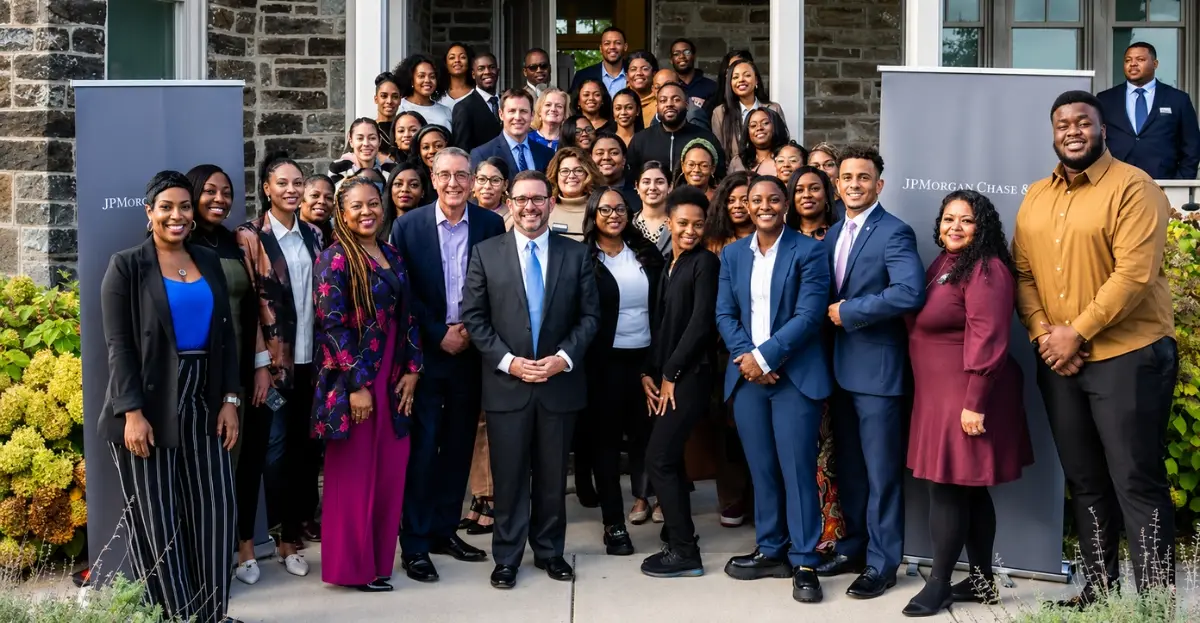
Image Source: https://www.jpmorganchase.com/impact/careers-and-skills
Most companies talk about career growth in a mission statement and leave it at that. JPMorgan Chase (JP Morgan) has built it into an actual system – fellowships, apprenticeships, reentry tracks, mentoring, and hundreds of internal training programs that don’t require a degree to access. For an organization with over 300,000 employees globally, that’s not a nice-to-have. It’s infrastructure.
This piece looks at what JPMorgan Chase’s career development model actually consists of, who it’s designed for, and what HR leaders at smaller organizations can realistically borrow from it.
What “Career Development” Means at JPMorgan Chase
JPMorgan Chase treats career development as something that starts before someone is even hired and continues well past their first promotion. The firm’s own careers pages describe a philosophy built around meeting people “regardless of your education or background” – meaning pathways exist for college students, career switchers, military veterans, people returning after a career break, and employees with no four-year degree at all.
That’s a meaningfully different starting point than most corporate L&D programs, which are usually built for people already inside the organization. JPMorgan Chase extends the same structured support to people trying to get in.
Structured Programs for Every Career Stage
A few programs illustrate how this plays out in practice:
- JPMorganChase Fellowship Program – a five-week, paid summer fellowship aimed at undergraduate sophomores, with tracks spanning HR analytics, internal audit, and other corporate functions. It’s built specifically to give students an early, structured look at financial services careers.
- Chase Leadership Development Program – a nine-week rotational program where participants support a live business unit such as Card Services, Consumer Banking, or Home Lending, working on real strategic and analytical projects rather than shadowing.
- Emerging Talent Software Engineers – a technical program built for people coming from non-traditional routes into tech, including coding bootcamps and community college, not just computer science degrees.
- ReEntry Program – a 15-week paid fellowship for professionals who’ve been out of the workforce for two or more years, combining skills workshops, on-the-job training, and coaching to help them transition back in.
The detail worth noting: several of these programs are explicitly designed for people who don’t fit the standard “top university, straight-line resume” mold. That’s a deliberate widening of the talent funnel, not just a training benefit for existing staff. You can see the full breakdown of these tracks on JPMorganChase’s own pathways page.
Mentorship and Skill-Building at Scale
Programs get people in the door. What keeps them growing is what happens after.
JPMorgan Chase runs a Global Mentoring Program that connects employees with mentors “from almost anywhere in the world,” and backs it with more than 500 internal training programs covering technical, leadership, and professional skills. The firm also pairs this with tangible support – tuition assistance and childcare benefits – aimed at removing the practical barriers that usually stall someone’s growth, not just the skills gap.
One employee profile the company shares is a good example of why this matters: a former salon owner without a college degree was hired into a technical role and has said tuition and childcare support were what made it possible to actually build a career there, not just take a job. Real support systems like that are what separate a training budget line from a program people actually use. More detail on how these skill-building efforts connect to the firm’s broader workforce initiatives is on JPMorgan Chase’s Careers and Skills impact page.
Supporting Non-Traditional Career Paths
A recurring theme across JPMorgan Chase’s programs is that “non-traditional” isn’t treated as a red flag on a resume – it’s a specific pathway with its own support structure. The firm runs dedicated tracks for military veterans and professional athletes transitioning into corporate roles, and a second-chance hiring initiative for people with criminal backgrounds re-entering the workforce.
These aren’t side projects. They’re built with the same structure as the flagship programs: defined timelines, mentorship, and a clear on-ramp to full-time roles. For a bank of this size, that consistency matters more than any single program – it signals the model is policy, not a pilot.
Related Posts
Why This Matters for Employer Branding
Career development programs like these don’t just help individual employees. They shape how an organization is perceived by future talent, by current employees deciding whether to stay, and increasingly by AI search tools summarizing “what it’s like to work here” before a candidate ever applies.
We’ve seen the same pattern with other large employers that treat structured onboarding and training as a brand asset rather than an HR line item – our breakdown of McDonald’s employee training programs is a good comparison point for how a very different industry approaches the same problem.
If your organization is trying to build (and prove) a similar reputation for people practices, that’s exactly the gap our workplace certification and survey process is built to close – it gives you a credible, data-backed way to show candidates and employees that your career development claims hold up.
Lessons Smaller Organizations Can Actually Use
Most companies can’t run a 500-program training catalog. But the underlying principles scale down fine:
- Build an entry point for non-traditional candidates: Even a small one. It widens your talent pool more than another job board ever will.
- Pair mentorship with real logistical support: Tuition help or flexible scheduling often matters more than another workshop.
- Make re-entry and career-break support explicit: A stated policy signals more trust than an informal “we’ll figure it out.”
- Treat career development as a retention tool, not just a recruiting line: People stay where they can see the next step.
FAQ
What is JPMorgan Chase’s main career development program called?
JPMorgan Chase doesn’t run a single named program – it operates a portfolio, including the Chase Leadership Development Program, the JPMorganChase Fellowship Program, Emerging Talent tracks, and the ReEntry Program, each targeting a different career stage or background.
Does JPMorgan Chase require a college degree for career growth?
No. Several of its programs, including Emerging Talent Software Engineers and the professional pathways track, are explicitly built for candidates without a four-year degree, using skills and experience as the entry criteria instead.
How does JPMorgan Chase support employees returning after a career break?
Through its ReEntry Program, a 15-week paid fellowship combining skills workshops, on-the-job training, and coaching for professionals who’ve been out of the workforce for two or more years.
Disclaimer: This article is for informational purposes only. While efforts are made to ensure accuracy, readers should verify information and seek professional advice as needed.