Will AI replace HR professionals, or is it merely rewriting the job description? As we move through 2026, this question has shifted from boardroom speculation to a daily reality. The anxiety surrounding automation is understandable, but the data suggests a different story.
Current industry reports show that AI adoption in human resource management has climbed to 45%. However, its primary impact is the elimination of “drudgery,” not people. We are seeing a transition where administrative roles are evolving into strategic ones.
AI is not coming for the heart of the department. It is coming for the spreadsheets and manual scheduling. These tasks have long kept HR from focusing on Leadership in workplaces. The goal is to move from paperwork to people-work.
Will AI replace HR? Only the repetitive parts
The most significant shift is occurring in transactional tasks. Generative tools now handle initial candidate screening and payroll processing. They do this with 50% greater efficiency than manual methods.
However, the “human” in Human Resources has never been more vital. Machines lack the nuance required for complex human interactions. They cannot replace the empathy needed for conflict resolution or the vision needed for long-term planning.
Roles that are evolving, not disappearing
Rather than total replacement, we are seeing a redefinition of the HR role. This technology is transforming three core areas.
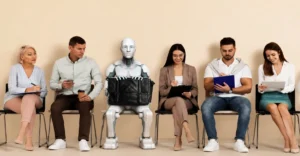
- Talent Acquisition: AI can screen 100 resumes per minute. It cannot assess a candidate’s “cultural add.” It cannot negotiate a complex offer with the empathy required to win top talent.
- Employee Experience: Bots answer FAQ-style questions about benefits. They cannot navigate the emotional complexities of a personal crisis. During delicate life events, they cannot replace human touch.
- Culture and Engagement: AI identifies a dip in morale through workplace surveys. However, it takes a human leader to interpret that data. A human must build a roadmap for genuine culture transformation.
Redefining the “Human” in Human Resources
The true value of a modern HR professional in 2026 lies in technology. You use it to enhance the experience of every employee. By automating tracking and reporting, you gain bandwidth. You will have the opportunity to concentrate on high-impact initiatives that drive business value.
- Strategic Workforce Planning: Use AI to predict future skill gaps. Then, design the certification programs needed to close them.
- Authentic Employer Branding: Use data-driven insights to tell a more honest story. Move away from generic marketing to show what life at the company is really like.
- Empathetic Leadership: Manage a workforce that expects radical flexibility. HR ensures that remote and hybrid workers feel as connected as those in the office.
Related Posts
The Rise of the Strategic HR Partner
We are entering an era where HR is a growth engine. Real-time analytics increasingly support decisions. Annual snapshots have become obsolete. For instance, AI-driven wellness programs now identify stress patterns early. This allows HR to intervene before burnout leads to resignation.
This transition requires a new set of skills. HR professionals are becoming “experience designers.” They are the guardians of ethics. They ensure that AI remains transparent and free from the biases found in historical data.
Enhancing Performance and Retention
The modern workplace thrives on feedback. In the past, this was a manual and slow process. Today, AI helps collect sentiment in real-time. But the machine doesn’t have the conversation; the HR manager does.
Managers can now see exactly where a team is struggling. They can precisely provide support when needed. This level of precision was impossible five years ago. It turns HR into a proactive force rather than a reactive one.
Building Trust through Transparency
As AI takes over more data processing, trust becomes the primary currency. Employees want to know how their data is being used. HR must step up as an advocate for the worker.
This involves explaining the “why” behind AI-driven decisions. It means ensuring that technology supports humans rather than monitoring them. Transparency in these processes is what builds a strong employer branding presence.
The Ethical Guardian Role
Algorithms are only as effective as the data they receive. HR must audit these systems regularly. You are the one who ensures that a hiring tool isn’t accidentally filtering out diverse candidates. This ethical oversight is a uniquely human responsibility.
The machine provides the speed, but the human provides the direction. This partnership is what creates a sustainable and healthy workplace.
Final Thoughts on the Future
The goal is not to compete with the machine. The goal is to supervise it. As automation handles the “noise” of high-volume tasks, HR is free to focus on the “signal.”
The signal is individual growth. It is team dynamics. It is the leadership that defines a truly great workplace. The future of HR is not automated; it is augmented.