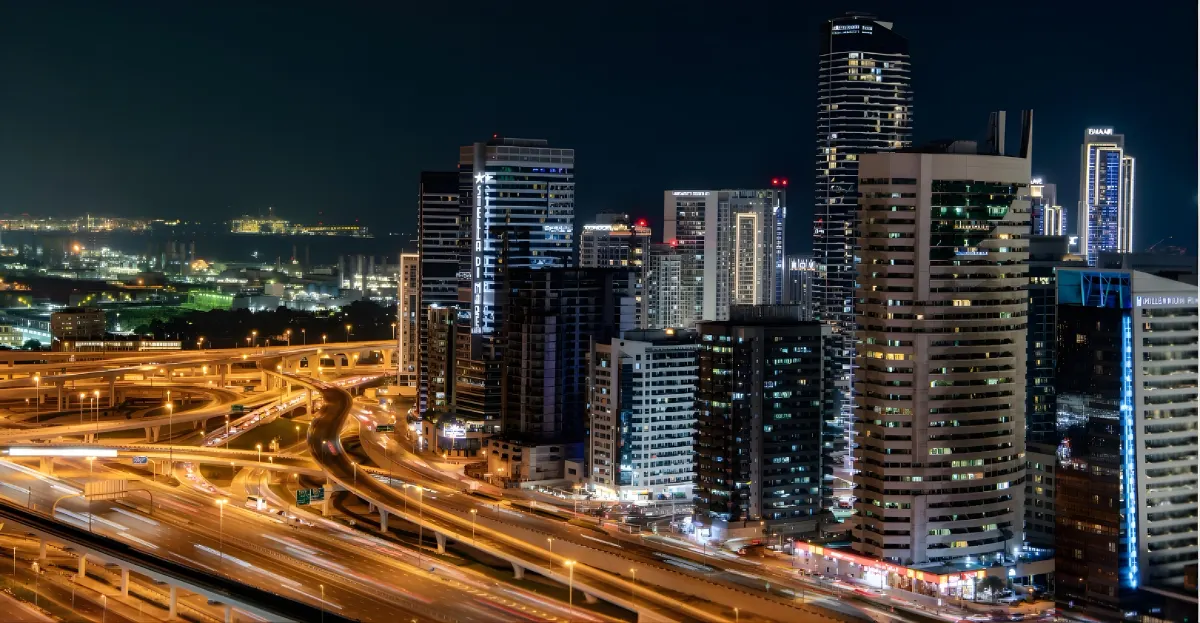
Dubai has built its reputation as a global business hub by combining infrastructure, tax advantages, and international talent.
But what defines “amazing workplaces” in the city is not just office perks or salaries. It is how companies operate within a fast-moving, highly competitive environment where industries like aviation, real estate, finance, and technology intersect daily.
Workplaces in Dubai are shaped by scale. Large multinational headquarters sit alongside regional startups, and both operate within a system designed for speed, global reach, and constant development. That creates a work environment that is structured, diverse, and often tied closely to the city’s physical and economic growth.
Where to Work and Where to Live in Dubai
The Link Between Workplaces and Urban Development
In Dubai, workplace quality is closely connected to where people live. Business districts like Dubai Marina, Downtown Dubai, and Dubai Internet City are designed to integrate residential, commercial, and lifestyle spaces into one ecosystem.
That integration is not accidental. The city’s development model prioritises proximity between work and living spaces to reduce commute times and improve efficiency. This is especially important in sectors like finance, tech, and real estate, where long working hours are common.
New developments are also shaping this dynamic. Luxury-focused projects by Binghatti are introducing Dubai’s high-end residential spaces designed around modern professional lifestyles. These developments combine architecture, amenities, and location to appeal to professionals working in nearby business hubs.
At the same time, established developers like Emaar Properties continue to define large-scale projects, including Downtown Dubai and the Burj Khalifa district. These areas combine office towers, residential units, and retail infrastructure, creating environments where work and daily life overlap.
This mix of new and established developments plays a direct role in how workplaces function. Accessibility, commute time, and surrounding infrastructure all influence productivity and employee experience.
The Companies Defining Dubai’s Most Amazing Workplaces
Multinational Corporations and Global Operations
Dubai is home to a dense concentration of multinational companies operating across sectors. Firms like DP World, Google, IBM, and HSBC maintain significant regional operations in the city.
These companies offer structured workplaces with defined career paths, international exposure, and access to global projects. For example, DP World operates in over 40 countries and plays a central role in global trade logistics, making its Dubai headquarters a key operational hub.
Technology firms like Google and IBM contribute to Dubai’s push toward digital transformation, particularly in areas like cloud computing and AI.
The presence of these organisations creates workplaces that are process-driven, globally connected, and often aligned with large-scale strategic initiatives.
Local Giants and Regional Leaders
Alongside multinational companies, Dubai’s own corporations play a major role in defining workplace standards.
The Emirates Group is one of the largest employers in the region, with over 100,000 employees from more than 170 nationalities. Its operations span aviation, logistics, and travel services, making it one of the most complex workplace environments in the city.
Companies like Emaar Properties provide exposure to large-scale development projects, including landmark structures and urban planning initiatives.
Retail and distribution groups such as Chalhoub Group and GMG also offer structured career growth and regional influence.
These organisations combine local market knowledge with international operations, creating workplaces that are both regionally grounded and globally connected.
Recognised High-Performing Workplaces
Dubai’s workplace landscape is also shaped by companies recognised for employee experience and organisational culture.
Lists of Amazing workplaces in the UAE regularly include organisations such as Dubai Duty Free, Dubai Electricity and Water Authority, and GEMS Education, Unicorp Technologies etc.
These companies are evaluated on factors such as employee engagement, organisational structure, and long-term career development. Recognition programs like Great Place to Work highlight how culture and operational systems influence overall performance.
In practice, these workplaces tend to combine structured management systems with clear development pathways.
What Actually Drives Workplace Quality in Dubai
Sector Influence on Work Environments
The sectors driving Dubai’s economy also shape its workplaces.
Construction, technology, and energy are among the fastest-growing industries, each with different operational models.
Construction and real estate workplaces are project-based, with teams organised around large developments. Technology firms focus on innovation cycles and digital infrastructure. Finance and consulting roles emphasise analysis, compliance, and global coordination.
These differences mean there is no single workplace model in Dubai. Instead, each sector defines its own structure and expectations.
Related Posts
Compensation and Career Structure
High salaries are a defining feature of many Dubai workplaces, particularly in finance, aviation, and consulting. Senior roles in top companies can exceed AED 70,000 per month, with additional performance-based incentives.
However, compensation is closely tied to performance and experience. Workplaces are competitive, and progression often depends on measurable results rather than tenure alone.
This creates environments where productivity and output are directly linked to career advancement.
Workforce Diversity and Scale
Dubai’s workforce is highly international. Companies often employ staff from dozens of nationalities, which introduces both opportunities and challenges.
Diverse teams bring a range of perspectives and skills, but also require structured communication and management systems to maintain efficiency.
Large organisations, particularly in aviation and logistics, operate at a scale that requires standardised processes and clear hierarchies. This ensures consistency across operations that may span multiple countries.
The Role of Infrastructure in Workplace Experience
Dubai’s infrastructure plays a direct role in how workplaces function.
Business districts are designed with connectivity in mind. Transport systems, including metro lines and major road networks, support daily commuting and reduce travel time between key areas.
Office spaces are also evolving. Many companies operate in high-rise towers equipped with advanced facilities, including flexible workspaces, meeting environments, and integrated technology systems.
Recent initiatives, such as converting public spaces into flexible work environments, show how the city is adapting to changing work patterns.
This level of infrastructure supports both traditional office models and newer, more flexible approaches to work.
Challenges Behind the Workplace Model
While Dubai offers strong opportunities, its workplace environment also comes with challenges.
The pace of work is often high, particularly in sectors like finance, consulting, and real estate. Long hours and performance expectations are common.
There is also a competitive labour market. Companies attract talent globally, which increases competition for roles and raises expectations for performance.
Regulatory frameworks, including visa sponsorship and employment laws, add another layer of complexity for both employers and employees.
These factors create workplaces that are efficient and high-performing, but also demanding.
Why Dubai Continues to Attract Talent
Despite these challenges, Dubai remains one of the most attractive destinations for professionals.
The combination of tax advantages, global exposure, and career opportunities continues to draw talent from around the world.
The city’s ability to integrate living, working, and infrastructure into a single system is a key factor. Professionals can live close to work, access international networks, and operate within industries that are growing rapidly.
At the same time, ongoing development ensures that the workplace landscape continues to evolve.
The Practical Takeaway
Amazing workplaces in Dubai are not defined by a single factor. They are the result of how companies, infrastructure, and urban development interact.
From multinational corporations to local industry leaders, workplaces in the city operate at a scale and speed that reflect Dubai’s broader economic model.
For professionals, understanding this environment means looking beyond job titles and salaries. It requires considering location, industry, company structure, and how all of these elements connect within the city’s ecosystem.
That combination is what makes Dubai’s workplaces stand out on a global level.