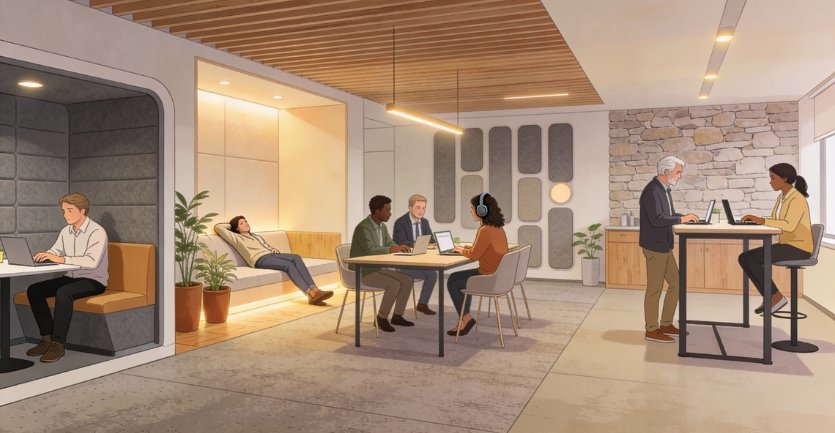
Neurodiversity is no longer a niche HR topic. It is a driver of innovation and a core component of talent strategy. With 15% to 20% of the population identifying as neurodivergent, including those with autism, ADHD, and dyslexia, the design of our environments must evolve.
For employers, building workplaces that support neurodiversity is about more than social responsibility. It is about accessing unique cognitive strengths like hyper-focus and complex pattern recognition.
Research suggests neurodivergent employees can be 90% to 140% more productive than neurotypical peers when the environment is right.
Optimizing the Sensory Environment
Standard offices often feature bright lights and constant noise. These can be significant barriers. Sensory differences mean that what one person finds vibrant, another finds overwhelming. Small physical shifts make a massive difference in daily performance.
- Acoustic Control: Offer quiet zones and noise-canceling headphones for deep work.
- Lighting Adjustments: Use dimmable LED lighting and maximize natural light.
- Visual Clarity: Reduce “visual noise” with neutral colors and clutter-free layouts.
- Physical Zoning: Create clear borders between social hubs and quiet focus areas.
Redesigning the Employee Experience
To support a diverse workforce, the experience must be tailored from the first touchpoint. Traditional recruitment often favors social “polish” over technical skill.
This inadvertently excludes brilliant talent. Adjusting these steps ensures you don’t filter out the best candidates.
- Skills-Based Hiring: Use work trials or portfolio reviews instead of high-pressure interviews.
- Clear Communication: Use literal language in job ads. Avoid vague “soft skill” jargon.
- Workplace Surveys: Use regular workplace surveys to identify specific team needs.
- Onboarding Clarity: Provide written guides for office norms and cultural expectations.
The Role of Leadership and Culture
A neuroinclusive culture starts at the top. Leadership in workplaces must move beyond awareness toward active advocacy. When leaders discuss cognitive diversity, it reduces the pressure on employees to “mask” their traits. Masking is a primary cause of workplace burnout.
- Manager Training: Teach managers to lead with flexibility and empathy.
- Certification: Pursuing a certification in inclusion provides a clear structural framework.
- Support Networks: Facilitate Employee Resource Groups (ERGs) for neurodivergent staff.
- Outcome Focus: Managed by the quality of work rather than the specific way it is done.
Related Posts
Boosting Your Employer Branding
In a tight talent market, your reputation for inclusion is a competitive advantage. Highlighting your commitment to workplaces that support neurodiversity strengthens your employer branding.
This makes your organization more attractive to Gen Z and millennial talent who value psychological safety.
- Transparent Values: Showcase neuroinclusion efforts on your career pages.
- Talent Retention: Neurodivergent staff show high loyalty to inclusive employers.
- Market Position: Inclusive firms are often viewed as more innovative by investors.
- Authentic Storytelling: Share real success stories of neurodivergent growth.
Practical Steps for Implementation
Moving toward an inclusive model doesn’t require a total overhaul. It starts with intentional shifts in interaction. By removing friction points, you create a space where everyone can focus on their best work.
- Meeting Hygiene: Send agendas early. Allow “cameras off” for virtual calls.
- Instructional Support: Give instructions in both verbal and written formats.
- Flexibility: Allow flexible start times to avoid the stress of peak commutes.
- Feedback Loops: Establish safe ways for employees to request adjustments.
Moving Beyond Compliance
Inclusive design is simply “good design.” Features like adjustable lighting and clear instructions benefit the entire workforce. The goal is to move away from a “one-size-fits-all” model toward an adaptable ecosystem.
By prioritizing these strategies, your organization moves beyond mere compliance. You build a resilient, high-performing team that feels valued for its unique perspective. This is the foundation of a modern, successful workplace. When we design for the edges, we better support the center.
Summary of Impact
- Productivity: Higher output through focused environments.
- Innovation: Diverse cognitive styles solve problems faster.
- Well-being: Reduced burnout and higher employee satisfaction.
- Equity: A fair chance for every mind to excel.
By focusing on these pillars, employers can ensure they are not just inviting neurodivergent talent to the table but setting them up to lead.