

For decades, the corporate world operated on a simple transaction: companies offered status, a high salary, and flashy office perks like ping-pong tables, and in return, employees offered their time, loyalty, and often, their personal well-being.
That contract is now void.
A new generation is entering the workforce, and they are reversing the hiring lens. They are not just asking “What’s the salary?” but “What’s the culture? What is your authenticity? How will this role impact my mental health?”
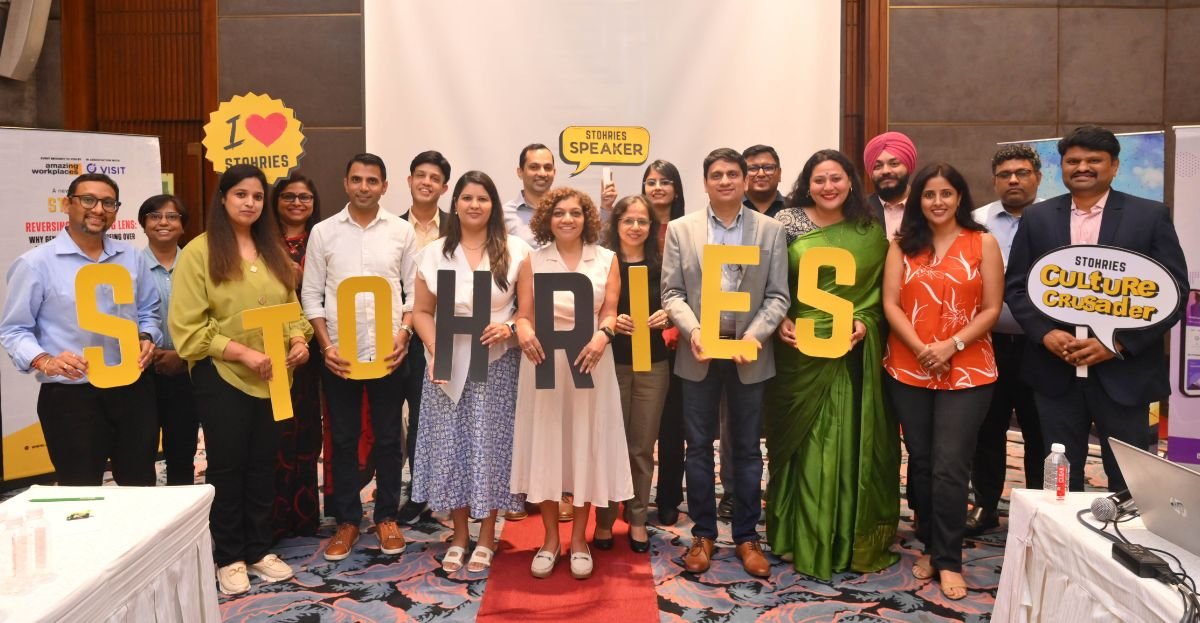
This fundamental paradigm shift was the central theme of the recent StoHRies roundtable, an exclusive series by Amazing Workplaces® in partnership with Visit Health, where human resource leaders dissect the most pressing challenges in people management. The session, “Reversing the Hiring Lens: Why Gen Z Chooses Well-being Over Perks, Pay, or Ping-Pong Tables,” was moderated by Sakshi Bajaj (Head – Talent, Rewards, Engagement & D&I, Compass Group India). She set a candid tone by leading a fun game where panelists had to guess the meaning of Gen Z lingo, perfectly framing a discussion about a generation that communicates and connects differently. The panel featured leaders from India’s top companies, who brought key insights on flexible well-being.
The consensus was clear: For Gen Z, well-being isn’t a “perk” to be negotiated; it’s the default, non-negotiable foundation upon which a career decision is made.
The New Non-Negotiable: From Burnout Culture to Firm Boundaries
The most significant shift identified by leaders is Gen Z’s proactive and vocal refusal of burnout culture. Unlike previous generations who may have worn exhaustion as a badge of honour, this new workforce is “unapologetic about drawing boundaries and vocal about mental health.”
Moderator Sakshi Bajaj highlighted this difference, sharing that Gen Z finds it “easy to mention about mental wellness,” a topic previous generations were not as open about. As she noted, “they are vocal about how they feel and ready to address it too.”
This was echoed by Keerti Dubey, DGM HR at a leading Media House, who noted that in the high-pressure media industry, this generation is “very vocal about the stress levels” and anxiety they face . She observed that they are “quick at prioritizing their health and having fun” alongside work, actively seeking a balance rather than sacrificing their life for the job.
This isn’t entitlement or laziness, as some critics claim; leaders at the roundtable agreed it is profound self-awareness. Gen Z has watched their predecessors burn out, and they are simply “refusing burnout”. The takeaway for organizations is stark: “The future belongs to organizations that don’t glorify exhaustion – they enable balance”.
“Stop Controlling, Start Collaborating”: The Leadership Dealbreaker
Gen Z’s desire for well-being extends directly to their relationship with management. The old, top-down, command-and-control hierarchy is a major dealbreaker. As one of the session’s key takeaways put it, “Gen Z doesn’t want bosses. They want coaches who listen, trust, and guide” .
Micromanagement, in particular, was cited as a primary reason for churn. Keerti Dubey emphasized that this generation “get[s] very irritated with micromanagement” and will often quit if the “vibe doesn’t match”.
What they demand instead is autonomy, ownership, and a continuous feedback loop. Sheetal Sharma, Total Rewards Consulting Leader at Mercer, explained that Gen Z requires “continuous feedback” for the work they are doing, finding that traditional annual feedback “doesn’t work for them”. They value clarity and dialogue, expecting managers to “talk with them, not at them”. For this generation, “leadership isn’t about authority anymore. It’s about authentic connection”.
The Reimagined EVP: Authenticity and Hyper-Personalization
When it comes to the Employee Value Proposition (EVP), the panel agreed that Gen Z has completely changed the game.
- Authenticity: They Can Spot a Fake
“Gen Z doesn’t follow brands. They follow authenticity”. This was a recurring theme. This generation has grown up seeing “the gaps between what’s said and what’s done”.
Related Posts
Mithun Gupta, Director Human Resources at Insurity, observed that where candidates once focused on brand, compensation, and role, “now it is the learning… and what is your culture?”.
They are doing their homework. Sudhanshu Bhatnagar, Head of Global Compensation & Benefits at Tech Mahindra, stressed that transparency is “very important” and that companies must maintain a “positive image in Glassdoor, because that’s what they really go and check”. They are looking for “a culture that’s lived, not advertised” and “leaders who walk the talk”.
Personalization: “One-Size-Fits-All” is Dead
Perhaps the biggest shift is the expectation of choice. “Personalization isn’t a perk for Gen Zs – it’s an expectation”. They don’t want token wellness programs; they want to “pick what aligns with their lifestyle, learning goals, and personal well-being”.
Leaders shared tangible examples of this in action:
- A Senior Manager HR from a renowned company, shared how her organization was “pressurized to take membership of cult because that’s what the requirement of Gen Z was”. They now also provide memberships for meditation and yoga, which are “extensively used” .
- Girish Kohli, GM – HR at Bennett Coleman & Co. Ltd. (TOI Group), spoke of an innovative “staycation” policy . His promoter-led organization leverages its “own guest houses” across the country, opening them up so employees can “go and relax with their families… as a vacation without any additional cost”.
- Ishan Bansal, Rewards Head, South Asia at Signify, summarized the new strategy: “personalize the rewards and benefits part,” including health, fitness, and gyming, while “still keeping in mind the costing”.
- Representing the event partner, Sharayu Narayanan (Visit Health), reiterated this point, drawing from her presentation on flexible offerings offered by Visit Health to state that flexibility is “super important” when designing benefits for this new generation.
The Quest for Purpose and a Seat at the Table
Ultimately, Gen Z isn’t just seeking comfort; they are seeking meaning. “They just want work to make sense” .
Sheetal Sharma (Mercer) noted that Gen Z wants “an organization that is high on value system” and is actively trying to understand how their specific role “fits into the larger purpose of the organization”.
Forward-thinking companies are finding ways to give them this voice. Sudhanshu Bhatnagar (Tech Mahindra) shared a powerful initiative: a “shadow board” where five people are selected to share and develop ideas. The “top ideas” are personally selected by the top management, who ensure the company follows up and “creates projects out of them”. This idea, along with other innovative concepts like Tech Mahindra’s “Yoga Pods”, was noted by moderator Sakshi Bajaj as particularly “exciting” ways to engage the new generation.
This taps into what Girish Kohli (Bennett Coleman) observed: Gen Z is “very self-driven,” with their “own thought process”. The job of senior leadership, he concluded, is to provide “flexibility… get out of the way and let them do the kind of the work that they want to do”
The Final Takeaway: “Stop Complaining, Start Learning”
This StoHRies session concluded with a powerful call to action for all HR leaders. Instead of viewing Gen Z as a complex problem, see them as a valuable catalyst for change.
Sukhpreet S Singh, Director Human Resources at Apna Mart, called for “transparency” and a genuine “intent to understand” them. Ishan Bansal (Signify) offered the guiding principle: “Not to generalize but internalize”.
Perhaps one of the most direct advice came from Keerti Dubey , who urged her peers to “Learn their lingo… Stop complaining and start Learning”.
Gen Z isn’t asking for the impossible. They are simply demanding what many in the workforce have silently wanted all along: a workplace that respects their time, values their health, and provides a sense of purpose . As the session’s final takeaway eloquently stated, “Maybe Gen Z isn’t rewriting the rules of work. They’re just reminding us why work mattered in the first place