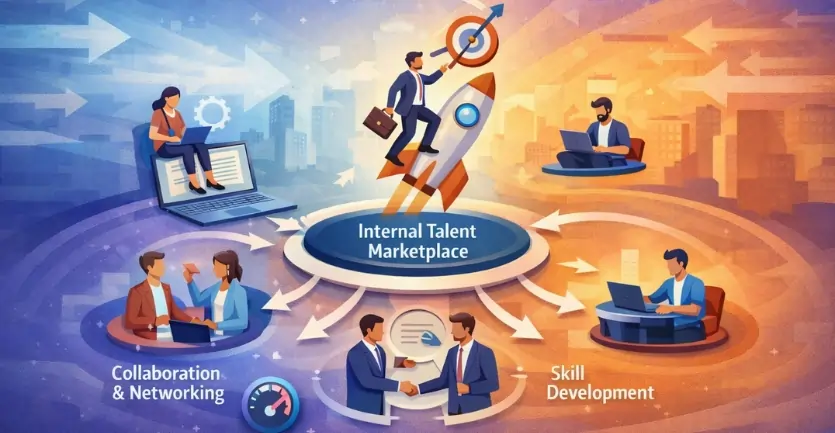


Internal Talent Marketplace adoption is the single most effective way to solve the modern skills gap. In a market where technical competencies become obsolete in just a few years, organizations cannot rely solely on external hiring. The most successful HR leaders are now looking inward. They are focusing on “skills velocity”-the rate at which a workforce can pivot, learn, and apply new abilities to meet urgent business needs.
To achieve this, the traditional, static job architecture must go. Instead, a fluid ecosystem allows for the rapid movement of people to projects. This shift ensures that your most valuable asset-human capital-is never stagnant.
Internal Talent Marketplace: Breaking Down Functional Silos
Functional silos are the primary enemy of agility. When an employee is locked into a single department, their growth is capped by that department’s budget and scope.
A dynamic marketplace removes these invisible walls. It allows a marketing analyst to lend data visualization skills to an HR project, or a salesperson to join a short-term product development sprint.
This fluidity does more than just fill resource gaps. It directly enhances your employer branding. Top talent today seeks more than a paycheck; they seek a career that is “limitless.”
When candidates see that your organization offers a platform for varied experiences, you become a destination of choice.
Building a Learning Culture
A marketplace is only as strong as the culture that supports it. If managers are allowed to “hoard” talent, the system will fail. True mobility requires a mindset shift from ownership to stewardship.
- Manager as Coach: Leadership must encourage reports to spend 10% of their time on “stretch assignments” outside their core role.
- Skill Transparency: Every employee should have a visible profile that highlights their unique strengths.
- Psychological Safety: Workers must feel empowered to try new roles without the risk of losing their standing in their home department.
When Leadership in workplaces actively promotes internal movement, it sends a clear message: growth is the priority. This top-down support is what differentiates a successful implementation from a failed pilot program.
Data-Driven Insights and Workplace Surveys
To refine your strategy, you need real-time data. This is where workplace surveys become invaluable. You shouldn’t guess if your marketplace is effective; you should know.
- Engagement Tracking: Are employees who participate in the marketplace more engaged than those who don’t?
- Friction Points: Use surveys to identify why some departments are hesitant to share talent.
Related Posts
- Skill Gaps: Analyze search data within the marketplace to see which skills are in high demand but low supply.
This data allows HR to be proactive. If you notice a surge in requests for AI-related skills, you can immediately pivot your training budgets to address that specific need.
The Value of Internal Certification
A marketplace provides the “where” for growth, but certification provides the “what.” Integrating a marketplace with structured learning ensures that movement is backed by verified competence.
- Verified Skills: When an employee completes a project, the project lead should “endorse” the skills used.
- Pathways: Create clear links between internal gigs and professional credentials.
- Motivation: Employees are more likely to pursue a certification if they see a direct path to applying that knowledge in a new internal role.
By gamifying this process, you create a self-sustaining cycle of improvement. The more an employee learns, the more opportunities they unlock.
Enhancing the Employee Experience
At its core, a talent marketplace is an investment in the employee experience. It turns the workplace into a playground for professional exploration. Instead of looking at job boards when they get bored, employees look at your internal portal.
- Retention: Internal hires are often more productive and stay longer than external ones.
- Diversity: Marketplaces reduce bias by matching skills to tasks through objective data.
- Onboarding: Cross-training through the marketplace makes employees more versatile and better connected.
Staying Competitive in a Global Market
Business isn’t slowing down. Companies that stay stuck in strict hierarchies won’t be able to respond to changes in the market. By putting skills velocity first, you make sure that your employees are always ready for what comes next.
This isn’t just something that HR is doing; it’s a key part of the business plan. Everyone wins when you make sure that your employees’ goals are in line with the needs of the business. The result is a stronger, more capable, and more energised organization that is ready to lead in its field.