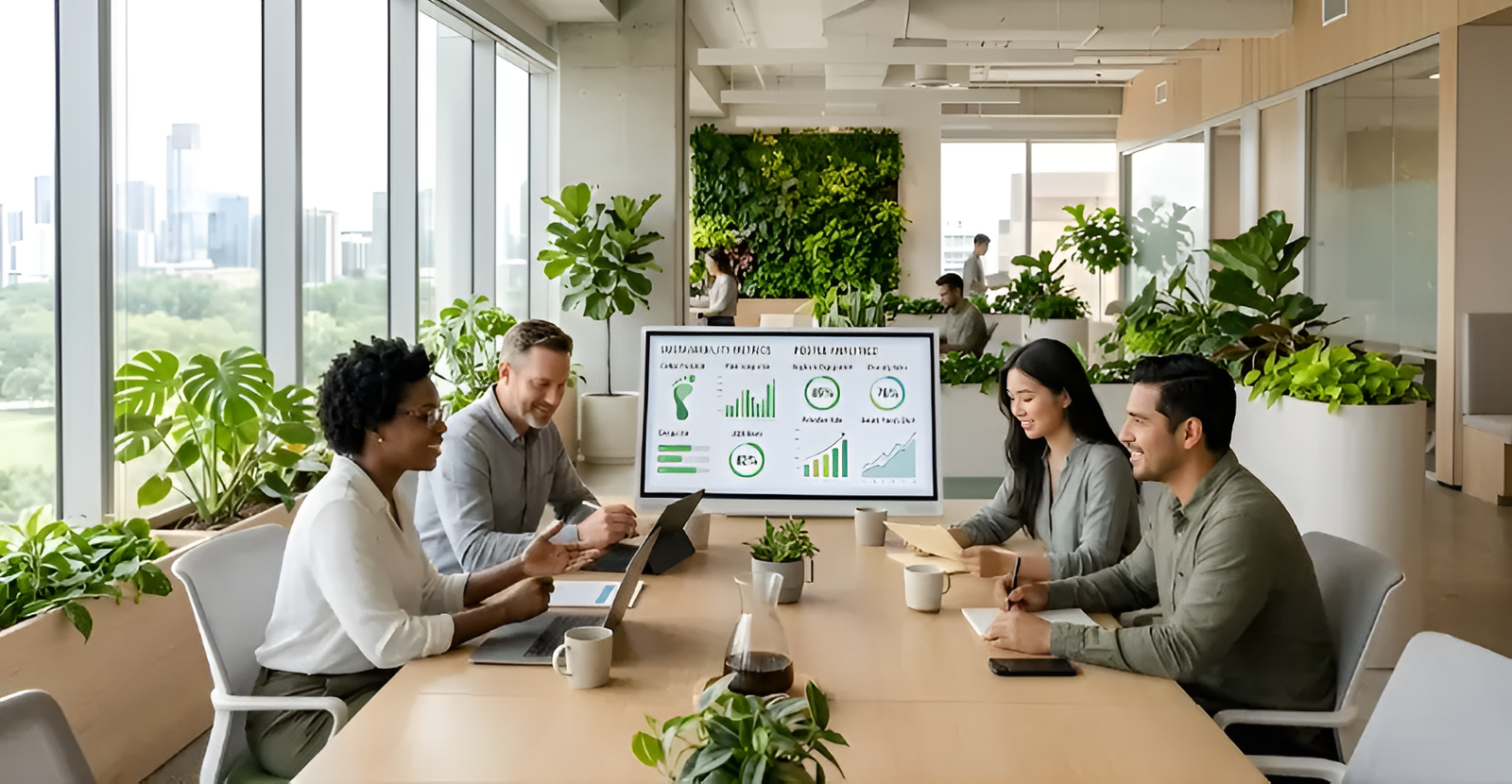


Green HRM practices are no longer a side initiative reserved for corporate sustainability reports. They have moved to the centre of how organisations recruit, retain, and engage talent.
Today’s workforce – especially younger professionals – actively evaluates a company’s environmental commitment before accepting a job offer. HR leaders who ignore this shift are already losing candidates to competitors who have taken it seriously.
The connection between sustainability and people strategy is no longer theoretical. It is showing up in hiring data, retention numbers, and employee satisfaction scores.
What Green HRM Practices Actually Look Like on the Ground
Green HRM practices go beyond paperwork-free offices and recycling bins. They involve embedding environmental responsibility into core HR functions – hiring, onboarding, performance management, and learning.
Some practical examples include:
- Eco-conscious recruitment: Promoting remote or hybrid roles to reduce commuting emissions and widen the talent pool.
- Green performance metrics: Including sustainability goals in appraisals and leadership scorecards.
- Sustainable learning programs: Replacing printed training materials with digital-first content and virtual classrooms.
- Wellness tied to environment: Encouraging outdoor activity, clean workspaces and lower-carbon lifestyle choices.
These are deliberate, measurable decisions – not just values listed on a careers page.
Green HRM Practices and Their Impact on Employer Branding
Employer branding today is shaped significantly by how a company treats the planet.
Candidates research organisations the same way consumers research products. They look at workplace surveys, third-party certifications, and employee testimonials before making a decision. A company with verified green credentials – whether through ISO 14001 certification or published sustainability disclosures – signals credibility and long-term thinking.
This matters more than many HR teams realise. According to a 2023 IBM Institute for Business Value study, nearly 70% of job seekers say a company’s environmental record influences their decision to accept an offer.
Organisations that authentically align their culture with sustainability values attract intrinsically motivated candidates. These are employees who stay longer, refer others, and perform at a higher level – not because of perks, but because of purpose.
Culture and Employee Experience Are Inseparable from Sustainability
A sustainable workplace culture is one where employees feel their daily work contributes to something larger than quarterly targets.
Related Posts
This is not abstract thinking. When employees see leadership in workplaces actively modelling green behaviour – minimising waste, backing climate-conscious policies, and making ethical supply chain decisions – it builds trust. Trust drives engagement. Engagement reduces attrition.
The employee experience in purpose-driven organisations tends to be richer and more consistent. People feel proud of where they work. That pride translates directly into referrals, retention, and a stronger external reputation.
On the other hand, companies that communicate sustainability values publicly but fail to reflect them internally create a disconnect. Employees notice. And so do candidates.
How HR Leaders Can Take Meaningful Action Today
If you want to move from intention to real impact, start with what you can measure and communicate:
- Run workplace surveys to understand how employees currently perceive your sustainability efforts and identify gaps
- Pursue relevant certifications that externally validate your environmental and social commitments
- Tie sustainability KPIs to leadership evaluations, accountability at the top changes behaviour at every level
- Communicate transparently about goals, progress, and setbacks in your employer branding content
- Build green thinking into onboarding so every new hire understands your environmental commitments from their first week
- Partner with vendors and suppliers who share your sustainability standards – it reinforces culture beyond your own walls
Small, consistent actions compound over time into a distinct and credible employer identity.
A Final Word
Organisations that treat sustainability as a genuine cultural value – not a compliance exercise – are building workplaces where people genuinely want to stay and grow.
Green HRM is not a passing trend. It is fast becoming a baseline expectation for the next generation of professionals entering the workforce.
The question for HR leaders is no longer whether to integrate sustainability into people practices. It is how quickly they can make it visible, measurable, and real.