

The Leadership Lesson I Learned About Appreciation That No Celebration Can Replace
Employee Appreciation Day is often marked by celebrations and formal recognition. But true appreciation doesn’t live in events – it lives in everyday leadership behaviour. This reflection explores why real-time recognition builds stronger, more meaningful workplaces.
When I hear the phrase Employee Appreciation Day, I don’t think of banners, stage backdrops, or scheduled celebrations.. I think of everyday moments-quiet conversations, feedback shared in passing, and small acknowledgements that made people feel seen.
Over the years, I’ve worked across engineering, aviation, manufacturing, service-led, and technology-driven organizations. From shop floors and hangars to corporate offices and regional branches, I’ve worked with teams ranging from 500 employees to over 11,000 across multiple locations.
Despite the differences in scale and industry, one thing has remained constant:
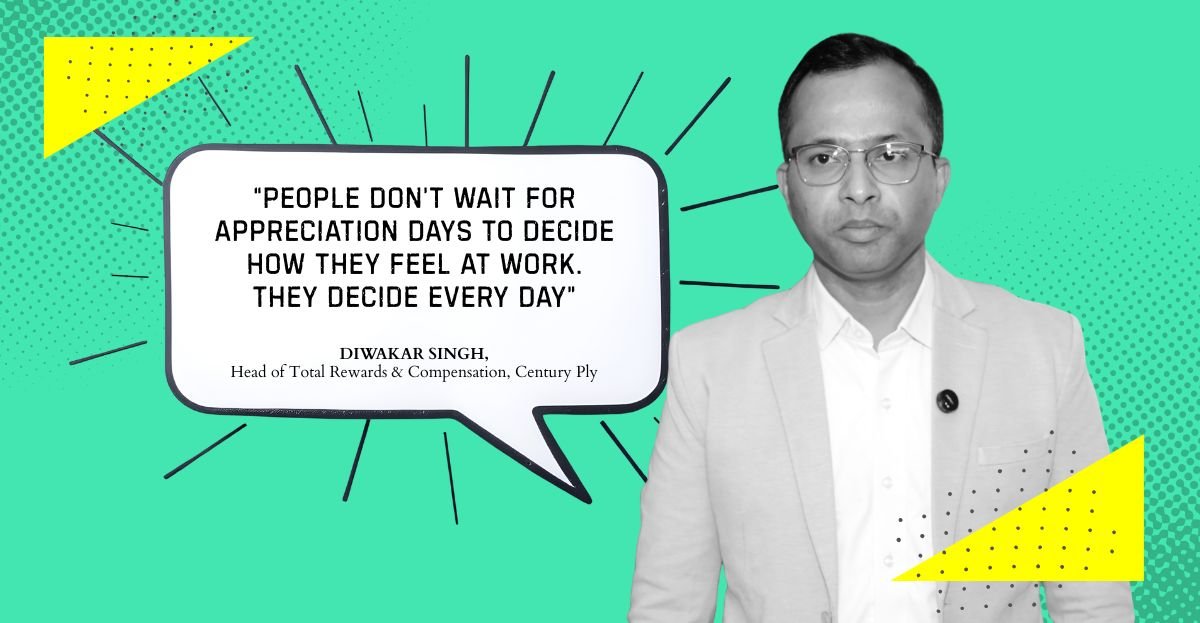
People don’t wait for appreciation days to decide how they feel at work.
They decide every day.
There wasn’t a single dramatic incident that shaped my thinking. Instead, it was a pattern I saw repeatedly-capable, committed employees delivering consistently, yet slowly disengaging. Not because they were unhappy, but because they felt invisible.
I remember a situation where a team had gone through an intense period of operational pressure. Deadlines were met, issues were resolved, and business moved on. In the rush, no one paused to acknowledge the effort it took to hold things together.
A few weeks later, one of the team members casually said, “We managed it, but I’m not sure anyone noticed how close it got.” That line stayed with me. The outcome was appreciated-but the effort was not.
That was my realization: appreciation is not about celebrating success; it’s about recognising the journey.
Today, my belief is simple but deeply personal.
Appreciation is not an occasion. It is a day-in, day-out practice. If we can appreciate life as it unfolds daily, we can certainly appreciate the people we spend more than half our lives working with.
Limiting appreciation to special days often turns it into a formality. Real appreciation shows up in how we speak, listen, and respond-especially when no one is watching.
At some point, I stopped waiting for formal employee recognition platforms to do the job for me.
I made it a habit to give instant feedback to people who genuinely deserved it. When someone did something well-handled a difficult situation, supported a colleague, or went beyond their role-I made sure they heard it directly from me.
Sometimes it was public. Sometimes it was private. And when it couldn’t be announced on the floor, a simple “Thank you, you’ve done a great job” was enough.
One such moment stands out. A team member had quietly taken ownership of an issue that wasn’t part of his role and resolved it without escalation. I thanked him personally the same day. Weeks later, during a routine conversation, he told me, “That one line of feedback made me feel I truly belong here.”
That was the impact. No certificate. No spotlight. Just timely recognition.
Related Posts
In many organizations, appreciation fails not because leaders don’t care-but because it gets over-designed and under-practiced.
We create reward frameworks but forget daily conversations. We celebrate outcomes but overlook effort. We thank people after success but stay silent during struggle.
Employee Appreciation Day should be less about celebration and more about reflection.
It should prompt leaders to ask:
- Do my people know their efforts are noticed?
- Do managers know how to give timely, human feedback?
- Are we appreciating only outcomes, or also intent and effort?
If appreciation disappears the moment HR reminders stop, then it was never embedded to begin with.
A Message to Young HR Professionals
You don’t need a title, budget, or policy to appreciate someone.
Start with your own teams.
Notice effort.
Acknowledge sincerity.
Give feedback-both positive and corrective-with respect.
HR cannot manufacture appreciation, but it can model it consistently.
On this Employee Appreciation Day, my question is simple:
If appreciation emails stopped tomorrow, would our people still feel valued?
When appreciation becomes a habit rather than a calendar event, employees don’t wait for special days to feel respected-hey feel it every day they show up.