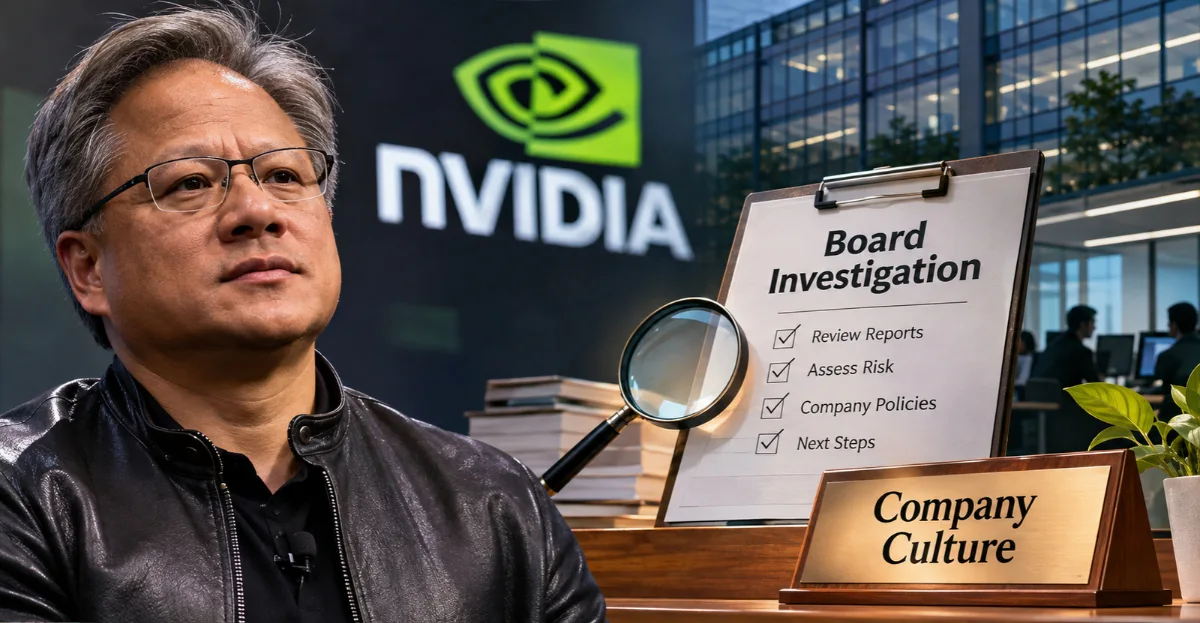
“Nvidia CEO admits affair” is the headline. The story under it is bigger. On Sunday, November 8, 2026, Jensen Huang told his employees he had been unfaithful to his wife, and Nvidia’s board announced an independent investigation the same day. For the people who work there, that’s a strange Monday. For HR leaders at every other company, it’s a live case study in what happens to a workplace when the person at the top is under review.
Nvidia CEO Admits Affair: What Happened
Nvidia CEO Jensen Huang told employees on November 8, 2026 that he had been unfaithful to his wife. The board announced an independent investigation the same day, led by independent directors with outside counsel, into reports that he was targeted by a foreign intelligence effort. It says it has no reason to believe secrets were compromised.
The story didn’t start on Sunday. On October 29, the New York Times reported that US spy agencies had spent about a year watching Alice Huang, then an executive at Megaspeed, a Singapore company that buys Nvidia chips, over her ties to China. (She and Jensen Huang aren’t related.) Officials reportedly didn’t believe Huang knew she might be gathering information for Beijing. By November 6, reports on a US government memo said China’s Ministry of State Security had recruited her to spy on him, and that the memo described a romantic relationship between the two.
Two days later Huang wrote to staff. “There is no excuse for what I did,” he said, according to The Next Web’s timeline of the case.
Here is where things stand, based on published reporting:
- Confirmed by Huang: he had a relationship outside his marriage and has apologized to his family and employees.
- Reported, not proven: US officials suspect Alice Huang was working for Chinese intelligence. China has rejected the accusations as unfounded, and neither she nor Huang has been charged.
- The board’s position: per Axios, an independent committee will investigate, and the board says it has confidence in Huang’s leadership.
- Still unknown: what the investigation finds, and whether Huang attends a closed-door House briefing requested for November 18.
What the Board Investigation Means for Nvidia Employees
Picture an engineer at her desk on Monday morning. Her group chat has three versions of the story. Her social feed has ten more. Her manager hasn’t said much, because everyone was told to wait for official word.
That’s the real employee experience of a leadership investigation. Not the headlines. The fog.
Nvidia’s timing makes the fog thicker. The company reports third-quarter results on November 17, and a House briefing has been requested for the next day. A spokesperson has said the news won’t slow the company and that Huang will keep leading without interruption. Employees still carry four questions that no press statement fully answers:
- Is my leadership about to change?
- Is the work I touch, including customer data and chip designs, safe?
- Will this follow me into the next recruiter call or customer meeting?
- Will the rules be applied to the top the same way they’re applied to me?
If you’re an employee at a company going through something similar, a few habits help. Stick to what the company confirms. Don’t forward rumor, even when it feels harmless. Know where your code of conduct says to report a concern, and use that channel instead of the group chat. And if you talk to customers, ask your manager for approved wording before you improvise.
What It Means for Company Culture
Culture is what leaders do when the rules get awkward. That’s my read, and this case tests it.
Start with the personal side. A marriage is a private matter, and Huang’s apology to his family is his to make. What belongs to the company is narrower: the other person worked at a customer, and US officials reportedly worried about what she could learn. The public record doesn’t say whether anyone inside Nvidia knew about the relationship before this month. The independent committee will have to answer that, and employees will read the answer closely.
Four things will shape how this lands inside the company:
- Standards at the top: Many companies require staff to disclose a close relationship with someone at a customer, supplier or competitor. Employees compare how the rule is enforced on a CEO with how it would be enforced on them.
- Independent review: Using a committee of independent directors and outside counsel is the standard move. It tells employees nobody is investigating themselves.
- Tone of the message: Huang’s note came as a first-person apology, published on Nvidia’s website as “A Message to Our Company.” Staff will judge whether the actions that follow match it.
- Open questions: Wedbush analyst Dan Ives called the probe a “black eye” and said Huang’s position could depend on what the board finds. The board has said otherwise for now. Until the facts are in, employees live with both statements.
Trust takes years to build and one bad news cycle to test. If you want the longer argument for treating culture as a business matter, our piece on why good work culture is becoming a business strategy lays it out.
Related Posts
Lessons HR Leaders Can Apply This Week
You don’t need a headline of your own to use this one. Try these four checks:
- Read your disclosure policy: Does it cover romantic relationships with customers, vendors and competitors? Does it name the CEO and board members, or only staff below them?
- Write the communication plan now: Decide who speaks to employees, how fast, and where questions go. Drafting it during a crisis is how contradictory emails get sent.
- Test your reporting channel: Anyone should be able to raise a concern about a senior leader without that report landing on the leader’s own desk.
- Ask your people before something happens: A confidential employee survey shows whether staff trust leadership while things are calm. The workplace survey and certification programme at Amazing Workplaces is built around that idea, and its 9-pillar framework covers people management practices end to end.
Does a CEO’s Affair Affect Employee Trust?
It can. Trust usually depends less on the personal conduct itself than on what follows: whether the leader owns it quickly, whether independent people review it, and whether the same rules apply to everyone. Employees forgive mistakes more readily than cover-ups, and they notice the difference fast.
Can a Board Remove a CEO Over an Affair?
It depends on the CEO’s contract, the company’s code of conduct and what an investigation finds. A personal relationship alone isn’t automatic grounds for removal. Boards tend to act when conduct breaks policy, creates a conflict of interest or puts the company at risk. In Nvidia’s case, the board has said it has confidence in Huang. This is general information, not legal advice.
What Happens Next
Three dates matter. Huang has until November 11 to answer the House committee chairs who asked him to attend a briefing. Nvidia reports quarterly results on November 17. The requested briefing is set for November 18. The board’s investigation and Singapore’s separate inquiry into Megaspeed are both still running.
No one outside the committee knows how it ends. What every workplace can take from it is simpler: the time to check your rules, your reporting channels and your leaders’ habits is before anyone is asking.
Disclaimer: This article is for informational purposes only. While efforts are made to ensure accuracy, readers should verify information and seek professional advice as needed.