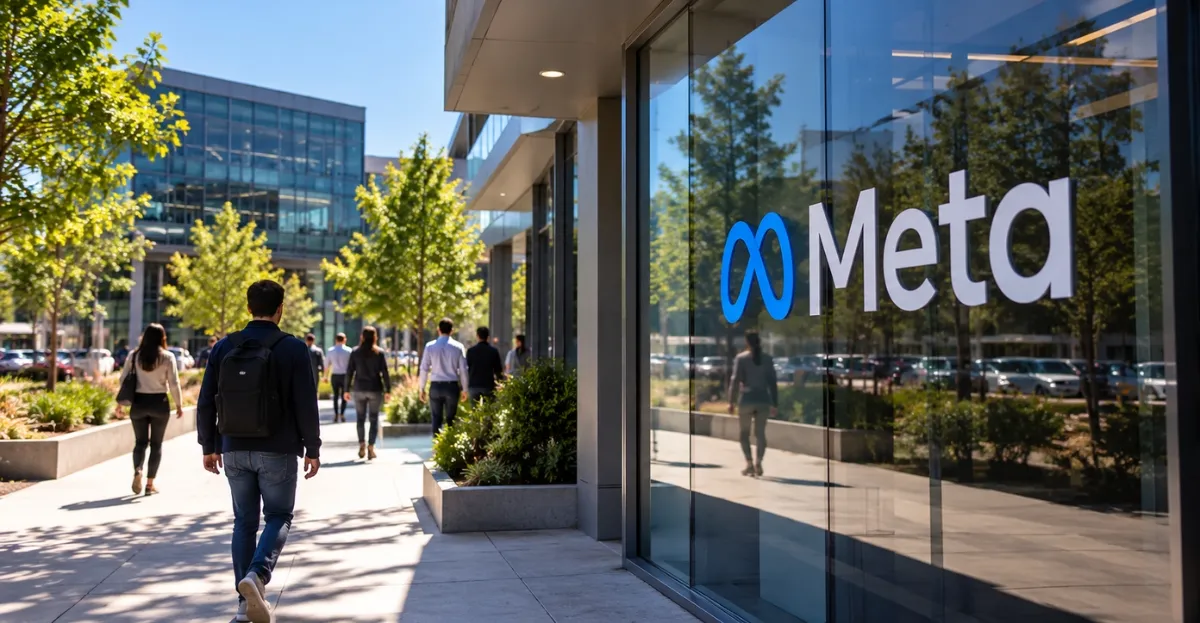
AI layoffs are job cuts where software helps score, rank or shortlist the people who go. The Meta case shows the risk. Twenty-six employees allege that AI-assisted scoring penalised workers on medical or family leave. Meta denies it. The takeaway for HR is plain: a named human must be able to explain every name on a redundancy list.
What happened at Meta
Meta told staff this spring that it would cut roughly 8,000 jobs, about 10% of its workforce, as it reshaped itself into an “AI-first” company. Around the same time it said it would spend between $125 billion and $145 billion on AI this year.
On July 13, 2026, 26 anonymous employees filed suit in the US District Court for the Northern District of California in Oakland. The group includes engineers, managers, researchers and designers, and they come from six states. They say Meta did not build its termination list through the judgment of managers who knew the work. In the complaint’s words, Meta used a “constellation” of internal AI systems to score, rank and select people.
Meta’s response is short. A spokesperson said “Workforce management and organizational decisions were and are made by people, not AI.” The company also says the claims lack merit.
None of this has been proven. These are allegations, and one side’s version of events is all we have so far.
What the plaintiffs say the AI measured
The complaint is specific, which is why HR teams are reading it closely. It points to:
- A tool called Metamate, plus employee-trained “second-brain” agents
- Keystroke and activity-monitoring data
- Dashboards tracking AI token usage, which sorted staff into labels like “AI Native,” “AI First” and “AI Enabled”
- Algorithmic performance ranking and calibration
Now picture an employee on twelve weeks of parental leave. Their keystrokes stop. Their token count stops. Their output numbers flatline. Nobody did anything wrong, yet the dashboard reads that absence as low performance.
That’s the heart of the claim. The plaintiffs argue these inputs can’t be earned during protected leave and can be depressed by a disability. Each of them requested leave or an accommodation in the 24 months before selection. One plaintiff says she was picked a day before her water broke.
Where the case stands
The plaintiffs asked for an emergency order to stop the layoffs. On July 17, Judge William Orrick refused. He said the workers could not show the “irreparable harm” needed for that kind of order, and he left the merits of their claims to private arbitration. Their lawyers noted that he still acknowledged the suit raises “serious questions.”
A preliminary injunction hearing followed on August 24. Reports from that day say the judge doubted the plaintiffs were likely to win at that stage and thought arbitration was the better place for their request for an independent audit of the layoff decisions. Because arbitration is private, we may never see a full public ruling on whether the AI tools did what the plaintiffs claim. Check for newer coverage before you cite the current status anywhere.
Reuters reported the suit is believed to be the first of its kind against a major US company. Law firm Carlton Fields, in its write-up of the lawsuit, describes it as a warning about the risks of AI-assisted employment decisions generally.
Why this matters even if Meta wins
Here’s the part many HR teams will miss. The legal outcome at Meta matters less than the pattern the complaint describes.
Any metric that depends on continuous presence will quietly punish legitimately absent people. Sick leave, maternity leave, caregiver leave and disability accommodations all lower raw activity numbers. If those numbers feed a ranking, the ranking carries a bias you never wrote into a policy. Lawyers call this disparate impact, and it doesn’t require anyone to intend it.
There’s also a second problem, and it’s about credibility. If a manager says “the system flagged you” and can’t explain why, you’ve lost the argument before it starts. Employees, tribunals and arbitrators all ask the same thing: who decided, and on what basis?
What is AI redundancy, and is it legal?
AI redundancy means using algorithmic tools to help decide whose role is cut during a reduction in force. Using software in the process isn’t illegal on its face. What creates liability is how the output is used.
Related Posts
In the US, laws such as the Americans with Disabilities Act, the Family and Medical Leave Act and pregnancy protections apply whether a human or a model produced the ranking. Outside the US the rules differ, and local retrenchment and maternity laws can add notice and compensation duties. Get your employment counsel to confirm what applies in your jurisdiction. This article isn’t legal advice.
A practical checklist before AI touches a layoff list
I’d run every one of these checks before any tool influences selection:
- List every input: If you can’t name exactly what the tool measures, don’t use its output for selection.
- Strip out leave and accommodation periods: Compare people on normalised data, or exclude those windows entirely. Never compare a full year against nine months.
- Ban activity proxies: Keystrokes, logins and token counts say little about the quality of work. They say a lot about who was at their desk.
- Name a human owner for each decision: That person should be able to defend the choice in plain language without mentioning the tool.
- Run an adverse impact check: Look at the proposed list by age, gender, disability status and leave history before anyone is told.
- Keep records: Preserve the data, the model version and the reasoning. The Meta plaintiffs have asked the court to require exactly that.
Three of those six are cheap. All six are cheaper than arbitration.
A note for HR teams in India and the Gulf
The lawsuit is American, but the practice isn’t. Companies in India and the UAE are adding AI to performance reviews and workforce planning at pace. Local protections for pregnant employees, notice periods for retrenchment and data-handling rules still apply, and a regulator will ask the same question a US judge would: was this decision fair and explainable?
If your team is already automating HR workflows, our piece on AI-connected forms and agentic workflows in HR operations covers where automation helps and where a person must stay in the loop. For a leader’s view on keeping technology human-centric, read Subramanyam Sreenivasaiah on AI, talent and future-ready workplaces.
Can employees challenge an AI-driven layoff?
Yes. Employees can raise discrimination, leave-interference and retaliation claims regardless of what tool shaped the decision. The route depends on their contract. Meta requires arbitration agreements, which is why the merits of this case are headed to private hearings instead of an open courtroom. The employer’s best defence is a clear paper trail showing that people with real knowledge of the work made and reviewed the call.
The bigger point for HR
Layoffs are the hardest moment in an employee’s relationship with a company, and the people who stay are watching how it’s handled. Research from People Matters on the ruling shows how closely the HR community is following this case. Trust takes years to build and one opaque list to lose.
At Amazing Workplaces®, we’ve surveyed more than 60,000 employees and worked with over 200 certified organisations. The pattern we see is steady: people accept hard decisions when they believe the process was fair and a real person stood behind it. AI can inform that process. It shouldn’t be the reason someone loses their job.
Disclaimer: This article is for informational purposes only. While efforts are made to ensure accuracy, readers should verify information and seek professional advice as needed.