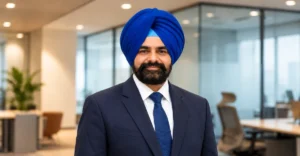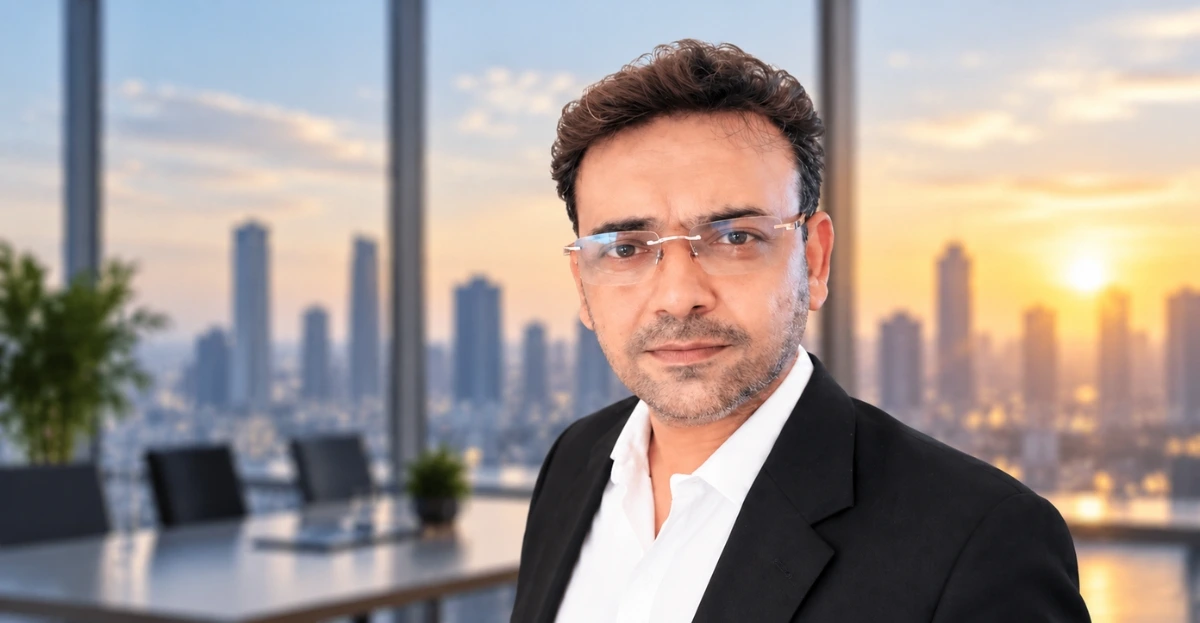
For more than two decades, Dr Sridhar Gundavajyala has watched the workforce industry change from the inside – from resumes and recruitment calls to AI, skills intelligence and total talent architecture. His journey offers a larger lesson: the real business of talent has never been about filling jobs. It has been about helping organisations adapt to change.
There was a time when a talent conversation was relatively straightforward. A company had a vacancy, a recruiter found a candidate, and a role was filled. For much of the staffing industry, that was the business.
But over the last two decades, the question has become considerably more complicated. Organisations today are not simply asking where to find people. They are asking what skills they will need, where those skills should come from, what work should remain human, what can be automated, and how their workforce needs to evolve as the business changes.
Few careers offer a better vantage point into that transition than Dr Sridhar’s. Over 23+ years, he has worked across staffing, HR consulting, professional services and managed services, driving business acquisition and international expansion across IT, BFSI, manufacturing, healthcare, engineering, captives and GCCs.
His career has been about growth. But more importantly, it has been about learning what makes growth sustainable. And that learning has changed the way he looks at talent.
The first reality of global growth: every market is different
Expansion can look attractive on a strategy deck, with a new geography, a new office and a new sales target. The reality on the ground, however, is considerably messier.
Dr. Sridhar’s experience building businesses across North America, Europe and Asia-Pacific taught him an early lesson: what works in one market rarely works unchanged in another. Labour laws differ, employment practices differ, compensation expectations differ, and so do client behaviours, cultural norms and definitions of success.
The temptation for a growing organisation is to take a successful playbook and replicate it everywhere, but Dr Sridhar learned to resist that temptation. For him, global expansion is less about exporting a model and more about localising a strategy.
The principle is simple: create common standards where consistency matters, but give local leaders enough authority to respond to the realities of their market. That philosophy eventually became central to his approach to leadership as well, because the more geographically distributed a business becomes, the more dangerous it is for every decision to travel back to headquarters.
Scale needs structure. But it also needs trust.
Growth taught him another lesson: build the machine before you accelerate it
There is a particular danger in fast growth: confusing activity with scalability. More people, more clients, more geographies and more revenue can appear to signal progress, but if the systems underneath cannot keep up, growth starts eating into margins, quality and customer experience.
Over the years, Dr Sridhar Gundavajyala worked on building centralized sourcing capabilities, delivery centres, technology-enabled operations, ATS and CRM workflows, analytics and standardized processes.
The lesson was not that businesses should become more bureaucratic. It was almost the opposite. Good infrastructure creates freedom. When finance, legal, technology and core operations have strong systems, market-facing teams can move faster, while sales and delivery leaders can focus on clients rather than constantly solving operational problems.
This led to a model that became increasingly important in his career: centralized infrastructure, decentralized execution. It was a lesson that became particularly valuable when the economy itself became unpredictable.
Recessions, pandemics and realignments: resilience is built before the crisis
A career spanning 23 years inevitably crosses a few economic storms. Dr Sridhar Gundavajyala has led businesses through the 2008 financial crisis, the disruption of 2020 and the technology and hiring realignments of recent years.
Each cycle reinforced the same reality: workforce businesses are deeply connected to the health of the economy. When companies slow down, staffing and consulting businesses feel it early.
That made diversification more than a growth strategy. It became a resilience strategy.
Dr Sridhar expanded his experience across industries rather than remaining dependent on a single sector. Healthcare, engineering, manufacturing, BFSI and other sectors provided different demand cycles. Similarly, the business moved beyond traditional contingent staffing into managed services, SOW engagements, executive search and consulting.
The thinking was straightforward. If one part of the market slows down, another can provide stability. A resilient workforce business, he learned, needs to think like an investment portfolio: concentration can accelerate growth, but diversification protects it.
But there was another asset that could not be diversified away so easily – people themselves.
The hidden balance sheet: people
In most businesses, losing a senior employee can be inconvenient. In staffing and consulting, it can be much more consequential because relationships sit with people, market knowledge sits with people, client trust sits with people, and institutional memory sits with people.
Dr Sridhar Gundavajyala therefore came to see retention differently. It wasn’t simply about employee engagement or satisfaction. Retention was business continuity.
That perspective shaped his approach to building high-performance teams – clear career paths, transparent performance measures, structured incentives and leadership development.
But there was an even bigger leadership lesson underneath it. A leader who has to personally solve every problem may be valuable in the short term, but a leader who builds people capable of solving those problems independently creates something far more valuable: an organisation that can scale beyond the individual.
This is why empowerment sits at the centre of Dr Sridhar’s leadership philosophy: set the direction, define the standards, give people the tools, and then let them lead.
Somewhere along the way, the business of staffing changed
The industry around Sridhar was changing too. The traditional staffing proposition – find a person, fill a role – was becoming increasingly commoditized. Technology made sourcing faster, databases became larger, and recruitment platforms became more sophisticated.
Clients began asking different questions:
- Could a partner help reduce workforce costs?
- Could it manage contingent labour?
- Could it build an offshore delivery model?
- Could it help solve a skills shortage?
- Could it advise on workforce strategy?
This pushed the industry from headcount supply towards workforce solutions. For Sridhar, it also changed the definition of value.
Related Posts
The most valuable partner was no longer necessarily the one who could produce the largest number of resumes. It was the one who could understand the business problem behind the hiring request.
That meant moving towards MSP, SOW, managed services, executive search and strategic consulting. The shift was from selling people to solving problems.
And then came a technology capable of changing the problem itself.
The resume may be becoming the wrong unit of measurement
For decades, the resume has been one of the fundamental currencies of recruitment. A candidate has a job title, a candidate has experience, and a candidate has a list of skills, while a recruiter searches for a match.
But what happens when the exact job title no longer tells us enough?
This is where Sridhar sees AI and workforce intelligence creating a fundamental shift. Instead of asking whether someone has held the exact role before, organisations can increasingly examine the underlying skills a person possesses – including adjacent skills that may not be obvious from a traditional resume.
The question changes from:
“Who has done this job?”
to:
“Who has the capabilities to do this work?”
That may sound like a small distinction. It isn’t.
It opens the door to internal mobility, skills adjacency, alternative talent pools and more intelligent workforce planning. AI can also move organisations from reacting to vacancies to anticipating workforce needs – identifying potential attrition, emerging skill gaps and future capacity requirements.
In other words, the industry is moving from recruitment to workforce intelligence.
But AI doesn’t make people irrelevant. It makes judgement more valuable.
There is an easy narrative around AI: machines will automate recruitment, and humans will eventually become less important. Dr Sridhar Gundavajyala sees a more nuanced future.
AI can search faster, identify patterns, analyse large volumes of data and predict. But it cannot fully understand trust, leadership character, organisational culture or the complexities of human relationships.
A senior executive hire is not just a skills match. Neither is deciding whether someone will thrive in an organisation.
And when algorithms begin influencing employment decisions, human oversight becomes even more important – particularly around bias, transparency and ethical governance.
The future, therefore, isn’t human versus AI. It is human judgement amplified by AI.
That belief sits at the heart of the next chapter of Dr Sridhar’s career.
The next workforce won’t fit neatly into an org chart
The workforce of the future is unlikely to be defined simply by permanent employees sitting inside organisational boundaries. It may include full-time employees, executives, contingent workers, SOW teams, gig talent, GCCs, global delivery centres and AI-driven automation.
The challenge for business leaders will not simply be deciding whom to hire. It will be deciding what combination of people, skills, technology, locations and partners will deliver the best business outcome.
That is the idea behind Total Talent Architecture. It replaces fragmented workforce decisions with a more integrated view of talent and represents a significant shift in thinking:
- From jobs to skills.
- From hiring to orchestration.
- From headcount to capability.
- From recruitment to workforce architecture.
What should the workforce of the future actually look like?
The answer may not be a bigger workforce. It may be a smarter one – one where people are deployed around skills rather than titles, where technology augments judgement rather than replacing it, where global talent can be accessed without traditional geographic constraints, and where organisations can continuously reshape their workforce as business needs change.
After 23+ years in the business of people, perhaps that is the most important shift in Sridhar’s own thinking:
The future of talent is not about filling the next job. It is about designing the next way of working.