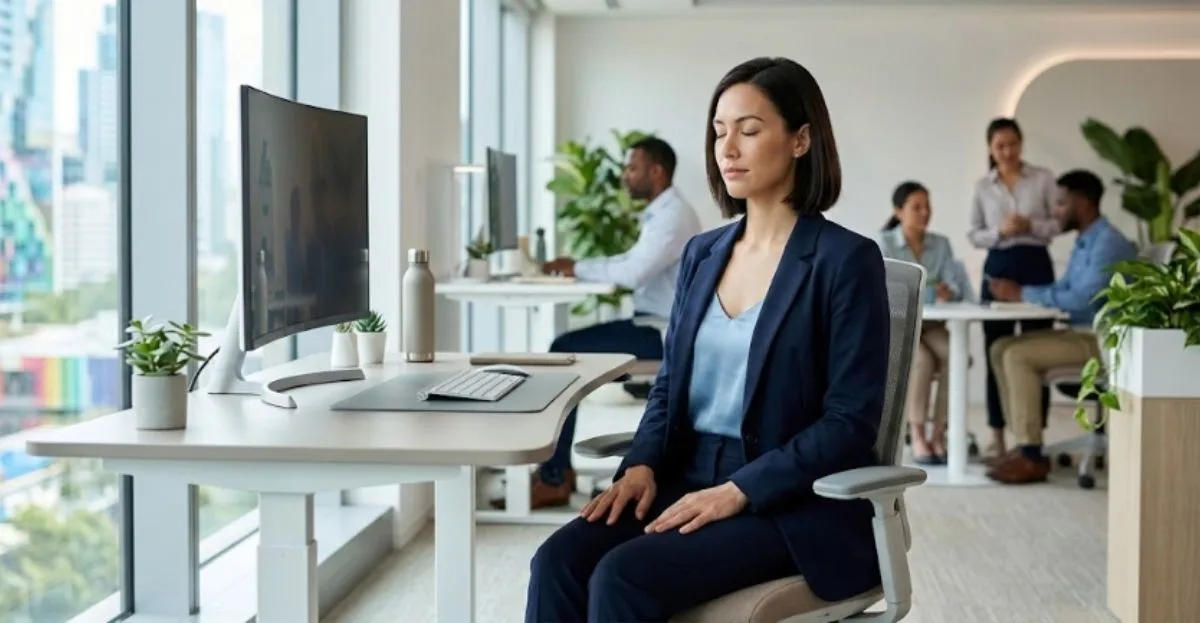
Nervous system regulation is the most critical survival skill for the 2026 workforce. As digital tools become increasingly immersive, our biological response to work has reached a critical threshold. Technostress is no longer a niche HR term. It is a physiological crisis affecting the global experience of work.
Current workplace surveys show that digital exhaustion is at an all-time high. Employees are juggling more platforms than ever. This constant switching keeps the brain in a state of hyper-vigilance. We are essentially asking 50,000-year-old biology to handle 21st-century data loads.
Nervous System Regulation as a Business Strategy
Leadership in workplaces must acknowledge that a stressed brain cannot innovate. When the sympathetic nervous system is stuck on “on”, the prefrontal cortex shuts down. This cortex is the area responsible for logic, empathy, and complex problem-solving. Without regulation, your team is operating in a primal survival mode.
This shift in focus is redefining employer branding. Top-tier talent in 2026 no longer prioritises office perks, like free snacks. They are looking for “Psychological Safety 2.0”. This means a culture that respects their biological limits and provides tools to reset their stress response.
The Cost of Digital Dysregulation
Ignoring the physical toll of technology is expensive. Data suggests that stress-related turnover costs companies billions annually. Beyond the financial loss, the impact on culture is devastating. Dysregulated leaders often pass their anxiety down to their teams, creating a “contagion” of stress.
- Brain Fog: Chronic cortisol elevation impairs memory and focus.
- Reduced Empathy: A survival state makes it harder to collaborate.
- Physical Fatigue: The body uses immense energy to stay “on alert.”
- High Turnover: Burned-out employees seek environments that offer “calm-tech.”
Practical Steps for Biological Wellness
To move forward, HR leaders are pursuing specialised certification in somatic wellness. These programs teach managers how to identify signs of dysregulation in their teams. It is about moving beyond surface-level wellness. We are talking about concrete habits that change how the body responds to a ringing phone or a full inbox.
1. Scent and Sound Landscapes
Offices are being redesigned with sensory health in mind. This includes noise-cancelling zones and natural lighting that aligns with circadian rhythms.
2. The 90-Minute Pulse
Research shows humans work best in 90-minute waves. Encouraging a 10-minute “nervous system reset” between tasks prevents the accumulation of stress.
Related Posts
3. Intentional Disconnection
Modern Leadership in workplaces involves setting hard boundaries. This means no “pinging” after hours and normalised “off-grid” deep work blocks during the day.
The Role of Workplace Culture
A healthy culture values “output over hours.” If your employees feel they must be available 24/7, they will never reach a state of rest. This leads to a “hollowed-out” workforce-people who are physically present but mentally exhausted.
Companies that prioritise nervous system health are seeing:
- 30% Increase in Creativity: A relaxed brain connects ideas faster.
- 25% Higher Engagement: Employees feel considered humans, not machines.
- Stronger Retention: People stay where they feel safe and energised.
Building a Resilient Workforce
The path to 2027 requires a new manual for human performance. We must treat the nervous system with the same respect we give our technical infrastructure. If a server overheats, we fix it. When a human “overheats,” we often tell them to work harder. That era of management is over.
Leadership in workplaces today is about co-regulation. If a leader stays grounded during a crisis, the team stays grounded. This creates a ripple effect of stability that strengthens the entire organisation.
The Future of Employee Wellness
As we look at the data from the past year, the trend is clear. Wellness is shifting from “perks” to “physiology.” Organisations that invest in nervous system regulation will be the ones that dominate their markets. They will have the most focused, creative, and loyal teams in the industry.
This change is not just a trend for 2026. It is a fundamental shift in how we view human labour. By honouring the body, we unlock the full potential of the mind. This is the true meaning of a modern, healthy workplace.