
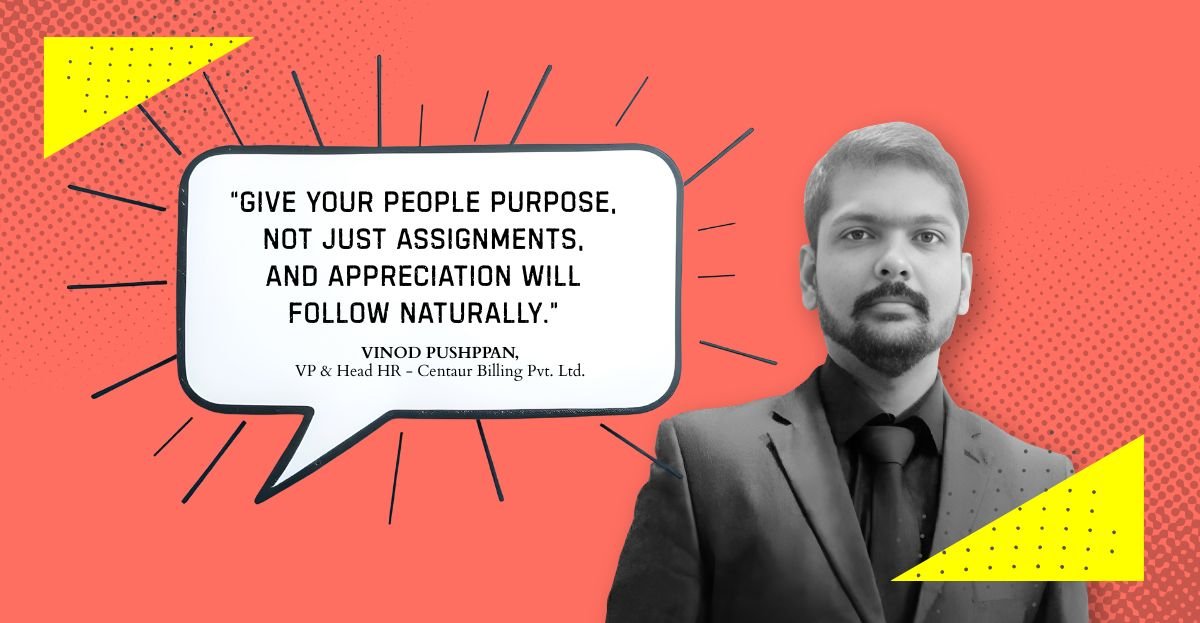


“Give your people purpose, not just assignments, and appreciation will follow naturally.”
Employee Appreciation Day usually comes with the right intent – thank-you emails, certificates, a team lunch, maybe a gift voucher. And honestly, these gestures do matter. But from what I’ve seen over the years, they rarely change how employees truly feel once the day is over.
Working closely with frontline teams, people managers, and senior leaders has taught me an important lesson: employees don’t disengage because appreciation is missing; they disengage because it’s inconsistent, unclear, or not connected to real effort.
That’s why I strongly believe appreciation is not an event. It’s a system – one that needs to be designed with intent, practiced consistently, and reinforced every single day.
The moment that changed my perspective
Early in my leadership journey, I conducted a detailed review of incentive payouts across teams. The objective was straightforward – to check cost efficiency and policy adherence. What emerged, however, was a much deeper cultural insight.
Over a few months, the data clearly showed:
-
Attendance-based incentives were being paid regularly
-
Performance-based incentives were rare, even though many employees were tenured
-
High performers were meeting expectations, but they didn’t feel recognised
Technically, everything was right. Policies were followed. Processes were in place. No one was treated unfairly. Yet something wasn’t working. Morale was slowly slipping.
When we spoke to employees, the message was almost identical everywhere:
“I know my job. I deliver. But I don’t know if it really matters.”
That’s when it struck me – appreciation breaks down when effort becomes invisible, even if compensation is accurate.
Appreciation is about clarity, not compliments
One of the most overlooked aspects of employee appreciation is clarity. Employees don’t just want praise; they want to clearly understand:
-
What exactly is expected from them
-
What success truly looks like
-
How their effort connects to recognition
Appreciation starts working when employees can confidently answer three questions:
-
What does good performance look like here?
-
How is my contribution measured?
-
How will my effort be acknowledged?
Without clarity, appreciation feels random. With clarity, even a small “well done” feels meaningful and credible.
My leadership belief: appreciation must be earnable, not random
One belief I hold strongly is this: employees should never be confused about how appreciation is earned.
When recognition feels random or personality-driven, disengagement quietly sets in. High performers stop stretching themselves. Consistent contributors begin to withdraw. Appreciation has to be earned, visible, and repeatable.
This doesn’t mean removing emotion or the human touch. It simply means grounding appreciation in:
-
Observable behaviours
-
Meaningful outcomes
-
Values being lived, not just spoken
When appreciation is predictable in principle but personal in delivery, trust builds — and trust is what sustains engagement.
The role of managers: from gatekeepers to amplifiers
Another lesson I learned the hard way: managers don’t fail at appreciation because they don’t care; they fail because they lack structure.
We often expect managers to naturally appreciate their teams without giving them the right tools, language, or alignment. That expectation isn’t fair.
Organizations need to:
-
Give managers clear frameworks for recognition
-
Encourage peer-to-peer appreciation, not just top-down praise
-
Make appreciation part of how leadership effectiveness is measured
Once leaders themselves were recognised for recognising others, appreciation began scaling naturally across teams.
Appreciation as a retention strategy
Today, employee appreciation is no longer a “nice to have.” It is a real business lever.
Organizations that consistently retain and grow talent focus on:
-
Recognition equity – who gets noticed and why
-
Career-linked appreciation – growth opportunities as recognition
-
Listening-based appreciation – acting on feedback, not just collecting it
In exit discussions, employees rarely say, “I wasn’t paid enough.” More often, they say, “I didn’t feel valued.” And feeling valued comes far more from everyday leadership behaviour than from benefits, policies, or slogans.
Reframing Employee Appreciation Day
So what should Employee Appreciation Day really mean?
Not just a day of gratitude, but a checkpoint of credibility – a moment for leaders to pause and ask:
-
Are we appreciating the right behaviours?
-
Are our systems rewarding effort or just attendance?
-
Do employees truly understand how they make a difference?
If the answers aren’t clear, the solution isn’t more gifts. It’s better design.
Final thought
Employee appreciation isn’t about making people feel good for one day. It’s about helping them feel important every day.
When appreciation becomes a system – not just a sentiment – employees don’t just stay. They commit. And in my experience, that’s the most meaningful form of appreciation any organization can offer.