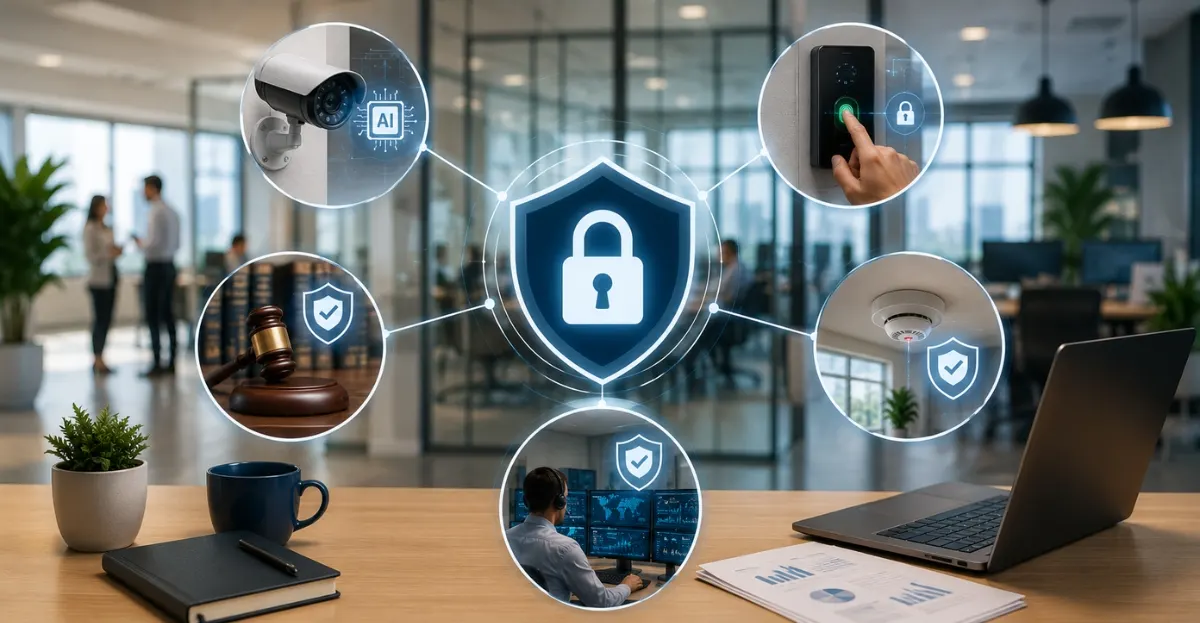
Companies of all sizes are at risk of disruption—from cyber threats and liability claims to internal risks that affect workplace trust and employee safety. Smaller organisations in particular often cannot maintain much margin for error. That’s why a comprehensive approach to business security—covering digital systems, physical environments and people—is essential. Creating a secure, supportive workplace enables you to grow your business from a place of stability, confidence and mutual trust.
Modern tools offer practical protection without draining your budget or time. Choosing the right systems and applying them with intention turns security into a daily advantage with benefits beyond safeguarding funds, including keeping operations running smoothly and building trust with investors and employees. Discover the best smart security measures for small businesses to invest in.
1. AI-driven Visual Intelligence
Traditional cameras offer passive recording, capturing incidents as they occur. Newer systems go further by supporting workplace safety and operational security in real time. AI-powered video tools interpret activity as it happens, learning patterns so they can recognize and flag anomalies that may pose risks to staff or business continuity.
This means that, rather than sifting through data or receiving alerts for routine activity like deliveries, you’ll be notified about situations that may affect employee wellbeing or secure operations. For example, unusual movement in restricted areas, unsafe behaviour, or unexpected after-hours access can all be flagged instantly. This approach reduces manual oversight while helping create a safer, more responsive work environment.
You can set parameters to define what may impact safety or operations. For instance, you could monitor how long individuals remain in potentially hazardous areas or trigger urgent alerts for out-of-hours access. Tailoring your system in this way allows you to respond quickly when needed, while maintaining a secure and supportive workplace for your team.
2. Biometric & Passkey Access
Using traditional security methods like keys and passes can, conversely, create weak points, as they rely heavily on human management. Items can be lost, shared, or misused, which can undermine both security and employee accountability.
Biometric systems and passkeys address these challenges by enabling identity-based access that supports both security and employee experience. With clearer visibility into who accesses specific areas and systems, you can create a more controlled, transparent environment while reducing friction for your team. Employees benefit from seamless, secure entry and login processes that remove the need for multiple credentials.
The rapid growth of the Internet of Things network means employees can use fingerprints, facial recognition, or secure device authentication to access both physical spaces and digital systems. Passkeys connected to smartphones can also support ‘presence-based locking’, where doors automatically secure when authorised devices leave the area.
These tools not only protect business assets but also contribute to a smoother, more secure workday, helping employees feel confident that both their workspace and the systems they use are protected.
3. Legal Protection for Personal Assets
Security goes beyond the physical and digital—it also includes the structure of your business itself. Without the right protections in place, owners may face personal liability for business-related issues, which can impact both financial stability and personal wellbeing.
Related Posts
Choosing a structure like a Texas LLC that separates personal and business liabilities ensures your personal assets, such as your home and savings, are protected from business debts and legal claims. This distinction is crucial for maintaining long-term stability, particularly in situations involving employee or customer-related incidents.
In addition to offering liability protection, an LLC can support operational credibility and flexibility through pass-through taxation. While insurance and strong internal processes remain essential, this structure provides a secure foundation that allows you to make decisions with greater confidence.
In addition to offering liability protection, an LLC can support operational credibility and flexibility through pass-through taxation. While insurance and strong internal processes remain essential, this structure provides a secure foundation that allows you to make decisions with greater confidence. This level of preparedness is particularly valuable for businesses undergoing expansion, office relocations, or working with texas movers to manage complex transitions while minimizing operational disruption.
4. Investing in Employee Safety
Fire alarms serve a single purpose, while modern sensors monitor a wider range of environmental risks. Smart devices can detect carbon monoxide, temperature fluctuations, and air quality issues, helping you identify potential hazards before they escalate into serious problems.
Connected through a unified network, these systems can send real-time alerts directly to your phone or a monitoring service, enabling quicker responses and reducing risk. This proactive approach supports employee wellbeing while protecting your business from incidents that could cause lasting disruption.
Additionally, these tools create digital records of workplace conditions, which can support insurance claims, compliance requirements, and internal improvements. A safer, well-managed environment not only protects your team but also contributes to higher morale and productivity.
5. Managed Threat Detection & Response
Cybersecurity threats evolve quickly, and small businesses often lack the internal resources to manage them effectively. Managed detection and response (MDR) services provide continuous monitoring, helping protect both your systems and the sensitive data your business holds.
These services focus on identifying and responding to risks that could compromise employee or customer data. By analysing activity across your network, MDR providers can detect unusual behaviour, contain threats, and prevent them from escalating into breaches that impact trust and compliance.
For example, if a phishing attempt introduces malware into your system, the service can isolate affected devices and stop the threat before it spreads. This level of protection helps ensure that personal and financial data remains secure, reinforcing trust with both employees and customers.
By reducing the likelihood of breaches and strengthening your overall security posture, MDR services support a safer digital environment—one that aligns with the expectations of modern employees, partners and clients alike.