Software designed to manage office space and workplace operations is gaining new visibility as companies return to the office and rethink how physical workplaces are used.
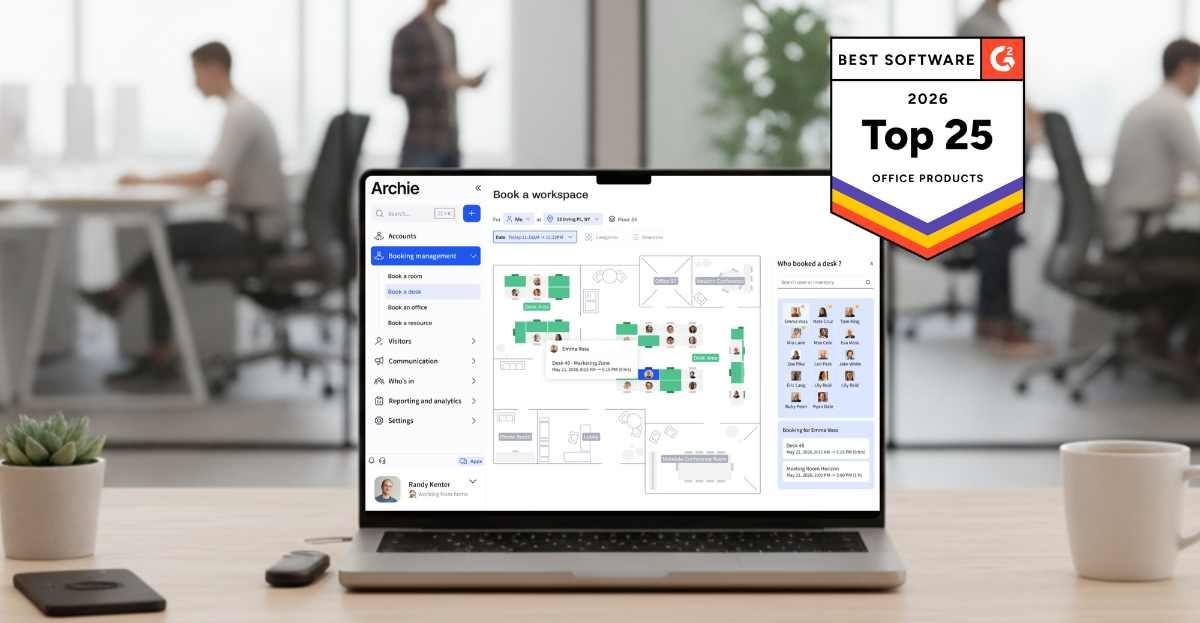
In G2’s 2026 Best Software Awards, several platforms focused on managing office space, desk bookings, meeting rooms, and workplace logistics appeared on the list of Best Office Management Software Products, including smart workspace technology platform Archie, which ranked #8 among the top 25 products.
The annual awards highlight top-performing software across hundreds of categories based on verified customer reviews and market presence data collected on G2’s marketplace.
G2 is one of the world’s largest software review platforms, used by millions of business buyers researching technology solutions. Its G2 Best Software Awards recognize products that combine strong customer satisfaction with growing adoption across organizations.
Because the rankings rely heavily on recent verified user reviews, only products with sufficient review activity during the evaluation period are eligible to appear on the list. That requirement means many smaller or emerging tools never qualify for consideration, making placement on the list a signal that a platform has reached a meaningful level of real-world adoption.
Appearing in the top 10 is particularly notable given the size of the workplace technology market. G2 tracks thousands of products across its marketplace, and only a small fraction ultimately appear on the Best Software lists each year. Ranking eighth places Archie among the highest-performing solutions in its category and effectively in the top tier of workplace software platforms currently evaluated by users on G2.
For vendors operating in office management, facilities technology, and workplace experience software, visibility on the list can significantly influence buying decisions. Many organizations researching new workplace tools rely on peer review platforms as part of their procurement process, especially when comparing multiple solutions that offer overlapping capabilities.
Return-to-office trends are reshaping workplace technology
The growing presence of office space management tools in software rankings reflects a broader shift in how organizations manage physical workplaces.
Over the past several years, many companies have moved away from traditional office setups built around fixed desks and static seating arrangements. Instead, organizations are increasingly operating hybrid workplaces, where employees split time between remote work and the office.
That shift has created demand for software that helps coordinate shared spaces, allowing employees to reserve desks, book meeting rooms, register visitors, and see which colleagues are in the office on a given day.
For workplace teams and facilities managers, these platforms also provide valuable data about how office space is used. Usage analytics can help organizations plan layouts, understand peak occupancy days, and optimize real estate usage as companies reconsider how much office space they actually need.
As hybrid work becomes a long-term operating model rather than a temporary adjustment, companies are investing more heavily in systems that connect digital workflows with the physical workplace. Office management software has become one of the key tools enabling that transition.
A rapidly growing category of workplace software
Vendors in this category offer tools for desk booking, meeting room scheduling, visitor management, and workplace analytics, often integrating several of these capabilities into a single platform.
Some products focus primarily on one part of the workflow, such as visitor management or desk reservations. Others aim to provide broader workplace coordination tools that combine multiple operational functions in a single system.
Related Posts
The category has expanded quickly as companies look for tools that connect employees with physical office resources in a flexible way. Desk booking systems, for example, have become common in hybrid workplaces where employees no longer have assigned desks but instead reserve space when they plan to come into the office.
Visitor management platforms have also gained traction as organizations place greater emphasis on workplace security and compliance, particularly in larger enterprise environments.
Coworking operators and flexible workspace providers are another major group adopting workplace management platforms, using them to handle memberships, bookings, payments, and community operations in shared environments.
How major office space management platforms ranked
Several workplace management platforms appeared on the Best Office Management Software Products list in G2’s 2026 rankings.
Among the companies included:
- Skedda ranked #7, primarily focused on desk and meeting room booking for organizations managing shared workspaces.
- Envoy Visitors ranked #14, focusing on front desk visitor check-ins and guest registration.
- FacilityOS ranked #17, targeting enterprise visitor security and compliance requirements.
- OfficeSpace ranked #19, specializing in space planning and workplace analytics.
The distribution of vendors across the list highlights how broad the office management category has become. Some platforms specialize in facilities planning and space management, while others focus on employee-facing workplace tools designed to simplify everyday office logistics.
How G2’s Best Software Awards are determined
G2’s Best Software Awards are based on data collected from its marketplace, where users leave verified reviews about the software they use in real workplaces.
Products are evaluated using a combination of customer satisfaction scores and market presence signals, including review volume, overall ratings, and adoption within the category.
To qualify for the awards, products must have a minimum number of recent verified reviews, ensuring the rankings reflect current user experiences rather than long-standing brand recognition alone.
That methodology often results in lists that include both established vendors and newer platforms gaining traction through strong customer feedback.
For emerging categories like workplace management software, this approach can surface platforms that are quickly gaining adoption among organizations adapting to hybrid work environments. As companies continue to rethink how offices function, tools that help coordinate workplace operations are likely to remain a growing part of the broader business software landscape.