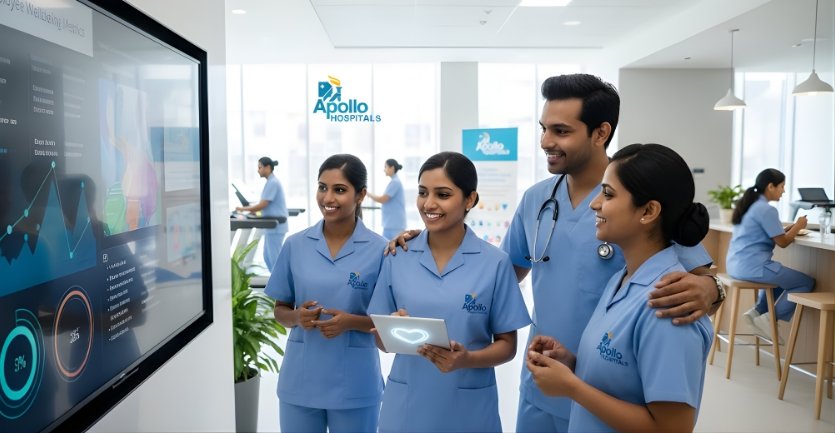
In the global healthcare sector, the stakes are perpetually high. For the frontline professionals at Apollo Hospitals, pressure is a daily reality. However, the organization has moved beyond traditional HR models. They have built a sustainable culture of care.
By prioritizing Employee Wellbeing in High-Stress Roles, Apollo proves a vital point. The health of a hospital starts with the people who walk its corridors. It is about more than just clinical outcomes; it is about human sustainability.
Managing the health of thousands of doctors and nurses requires a deep strategy. It requires a clear understanding of the unique stressors found in clinical environments. This focus has become a cornerstone of their employer branding.
This strategy positions the group as a preferred destination for talent. In a competitive market, they stand out by putting people first. They recognize that healthcare workers cannot pour from an empty cup.
A Data-Driven Approach to Wellness
Apollo Hospitals uses regular workplace surveys to keep a pulse on staff sentiment. These insights allow the leadership to identify specific stress points. They look at both clinical and non-clinical roles to get a full picture.
Data from recent fiscal years highlights a major shift. The organization now focuses on proactive mental health management. They have moved away from reactive crisis intervention, which often comes too late.
Instead of waiting for burnout, the hospital implements preventive measures. These are based on real-time feedback from the floor. These are not just corporate perks or surface-level benefits.
They are core components of a strategy to attract and keep top talent. By listening to the actual needs of the staff, they stay relevant. They ensure that every intervention is impactful for the person doing the work.
Project Heal and Psychological Safety
One of the standout initiatives is “Project Heal.” It was launched specifically to address the emotional toll of medical work. It focuses on building resilience through several key areas:
- Sensitivity Training: This teaches supervisors to spot early signs of emotional fatigue. It helps prevent “compassion fatigue” before it leads to resignation.
- Private Counseling: Staff get anonymous, 24/7 access to professional therapists. This helps break the long-standing stigma around mental health in medicine.
- Resilience Workshops: These build the emotional tools needed for high-intensity areas. This includes the emergency room and critical care units.
- Peer Support Networks: These create safe, informal spaces for sharing burdens. Staff can discuss patient loss or difficult diagnoses without any judgment.
- Crisis Debriefing: Teams hold mandatory check-ins after high-stress medical events. This ensures they process trauma collectively and healthily.
This initiative has directly improved the daily experience of the nursing staff. Internal audits show that participating teams report lower levels of exhaustion. They also demonstrate much better collaboration during medical emergencies.
Embedding Kindness into Leadership
Leadership in workplaces often focuses purely on operational efficiency. At Apollo, kindness is treated as a measurable competency. It is a core part of how they define success.
The “10 Commandments of BEKIND” formalize this approach. The “Tender Loving Care” programs make empathy a professional standard. It is not viewed as an optional trait for staff.
Leaders are encouraged to practice behaviors that humanize the hospital:
Related Posts
- Daily Huddles: These are not just for task delegation. They are used to acknowledge hard work and check on team morale.
- Kindness Walls: These are physical and digital spaces for appreciation. Staff post notes to colleagues to foster a sense of belonging.
- Empathy Metrics: Compassion and teamwork are part of formal reviews. This rewards the “human” side of medicine alongside technical skill.
- Recognition Galas: These monthly events celebrate non-clinical triumphs. They ensure support staff feel as valued as the lead surgeons.
- Open-Door Policies: Junior staff members can reach leadership easily. They are encouraged to suggest ways to improve the work environment.
From FY 2021-22 to FY 2024-25, documented acts of peer support nearly doubled. They rose from 3,551 to nearly 7,000 instances. This shows that empathy is now part of the organization’s DNA.
Holistic Physical Health Support
The Apollo Life Corporate Wellness Program provides clinical-grade support. It acknowledges that caregivers often neglect their own health needs. The program includes several layers of protection:
- Wellness Prescriptions: These are based on comprehensive annual health scans. They are tailored to the individual’s age, role, and history.
- On-site Health Facilities: Staff have access to gyms and yoga sessions. Nutritional counseling is provided during work hours to save them time.
- Shift Optimization: Data tools are used to plan rotations carefully. This helps prevent chronic sleep deprivation and physical fatigue.
- Vaccination Drives: Frontline staff receive proactive immunization. This protects them against seasonal and occupational health risks.
- Healthy Dining: Cafeteria menus provide high-protein, low-glycemic meals. These sustain energy levels during long and demanding shifts.
Cultivating Long-term Engagement
The organization understands that certification is a natural outcome of a healthy culture. They focus on a “Total Reward” philosophy for every employee. Mental peace and physical health are valued as much as pay.
In an industry known for high turnover, their retention is impressive. The focus on Employee Wellbeing in High-Stress Roles is not a gimmick. It is a strategic necessity for any modern healthcare provider.
When healthcare workers feel truly cared for, they provide better care. This creates a virtuous cycle of health and high performance. It builds long-term loyalty that benefits the entire healthcare ecosystem.
Apollo Hospitals is setting a clear benchmark for the entire industry. They prove that a people-first approach is the most effective way. It leads to operational excellence and a lasting positive impact.
Disclaimer: This article is for informational purposes only. While efforts are made to ensure accuracy, readers should verify information and seek professional advice as needed.